Friends,
The spirit of "Party Unity, My Ass" has resurfaced within the Democratic Party, illustrating a growing divide between centrist power brokers and the party's emerging progressive wing. This phenomenon, originally associated with the 2008 election, describes a scenario where establishment figures prioritize their own influence over collective party success when faced with candidates they deem ideologically threatening.
Centrist Resistance and Internal Conflict
Current political tensions have intensified as DSA-aligned candidates and other progressives secure primary victories across the country. In response, some moderate Democrats have signaled a willingness to abandon party loyalty if it means preventing a leftward shift in policy.
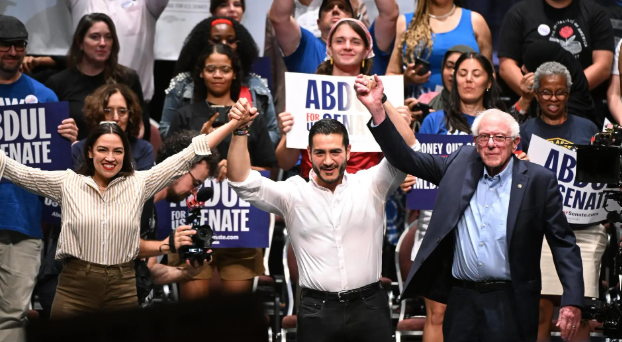
The Ideological Threshold: Figures like James Carville have openly expressed a preference for Republican control over a narrow Democratic majority, fearing that the latter would be beholden to the Democratic Socialists of America. Selective Unity: For many centrist leaders, "party unity" is often weaponized to demand conformity from the left, yet this commitment frequently evaporates when establishment candidates lose their own primaries. Targeting Progressives: In Michigan, Senate candidate Abdul El-Sayed has faced significant opposition not just from political rivals, but from members of his own party who have urged voters to leave his spot on the ballot blank, effectively endangering his general election prospects.
Understanding the Institutional Struggle
The hostility toward candidates like El-Sayed highlights a deeper struggle for control within the Democratic Party. Analysts suggest this behavior aligns with the "iron law of institutions," where those in power prioritize maintaining their existing status above the long-term viability of the organization itself.
Defensive Posturing: The efforts to undermine progressive candidates are often framed as a reaction to potential policy changes that could disrupt donor-friendly agendas. Backlash Risks: By actively working against their own nominees, centrist detractors risk alienating the party base and potentially ceding power to political opponents in the process. Shifting Dynamics: Despite this internal friction, candidates like El-Sayed often maintain strong support among rank-and-file voters, suggesting that the influence of traditional party power brokers may be waning.
In summary, the re-emergence of this exclusionary factionalism reflects a high-stakes power struggle within the Democratic Party. While centrist elements attempt to protect their institutional influence against progressive and socialist challengers, their tactics—ranging from withholding endorsements to open defiance—threaten to fracture the party and ultimately diminish its ability to achieve broader electoral goals.
This dynamics of internal factionalism highlights why I stood as a lead activist and advocate for Nevada's Question 3 initiative—promoting open primaries and top-five ranked-choice voting. The reality of modern American politics is that we effectively have "parties within parties." Within the Democratic Party, distinct moderate, progressive, and conservative wings compete for direction; simultaneously, the Republican Party contains a traditional conservative wing alongside an extreme reactionary faction led by Donald Trump. Voters deserve a system that allows them to clearly see and evaluate these internal distinctions without electoral gatekeeping. When I am elected to Congress, I will champion structural election reforms—including open primaries and top-five ranked-choice voting—to guarantee that voters have maximum transparency, real choices, and a direct voice in our democracy.
In Solidarity,
Gamy Enriquez, MPA
2028 Congressional Candidate
Nevada’s Second Congressional District