Friends,
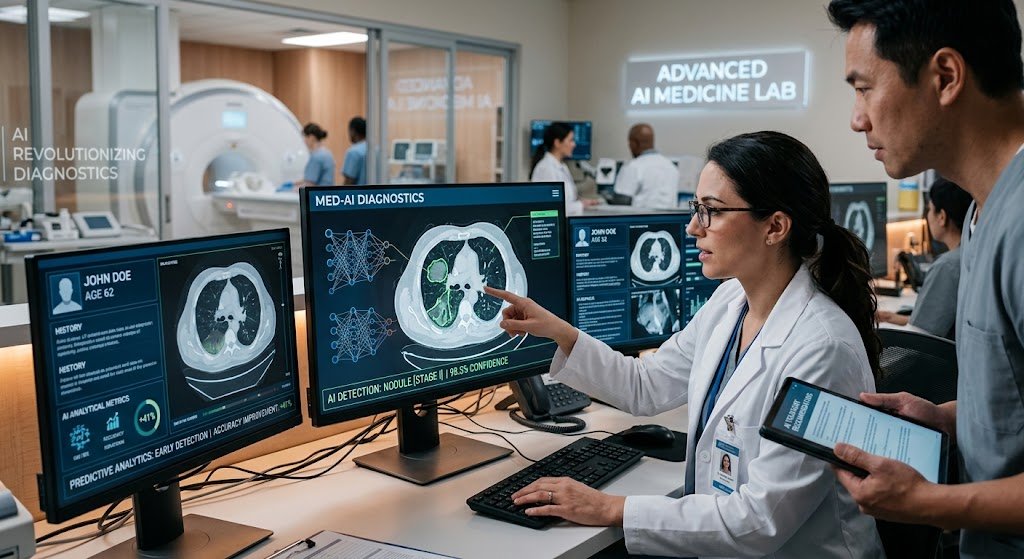
Artificial intelligence holds transformative potential for medical diagnostics and clinical procedures, yet it must remain a supervised tool rather than a replacement for human medical expertise. As the integration of advanced technologies like computer vision and large language models accelerates, the medical community is finding that the most effective way to improve patient outcomes is by keeping the final authority in the hands of trained doctors.
Current Applications and Clinical Impact
AI is currently making the most significant strides in fields that rely heavily on visual interpretation and data analysis. According to researcher Shreya Johri, the primary ways AI is reshaping clinical practice include:
• Diagnostic Imaging: Radiology serves as the primary hub for AI adoption, with the vast majority of FDA-approved models helping clinicians interpret scans like mammograms, CTs, and X-rays.
• Real-Time Surgical Assistance: In complex fields like surgery, AI can act as a visual aid to help surgeons identify critical anatomical structures during delicate procedures, effectively reducing the risk of human error.
• Administrative and Communication Efficiency: Newer applications, such as large language models, are being tested to summarize lengthy patient histories or assist in documenting conditions, allowing doctors to dedicate more time to empathetic patient interaction.
The Necessity of Human Oversight
While statistics—such as the 29% increase in breast cancer detection observed in recent large-scale studies—are promising, Johri emphasizes that these results rely on AI serving as a "second reader" or assistant. The core philosophy in these successful deployments is that the doctor retains the role of final decision-maker.
• Empowered Discretion: In recent clinical trials, the ability for surgeons to manually switch off AI assistance demonstrates that technology is most effective when it augments, rather than dictates, clinical judgment.
• Frameworks for Accountability: Because medical cases are often highly complex and involve nuanced factors like tissue density or patient history, current frameworks are not yet robust enough to allow for autonomous diagnosis.
• Maintaining the Standard of Care: Relying on AI for self-diagnosis or replacing professional medical intervention poses significant risks. The consensus remains that until more sophisticated regulatory protocols are developed, the human element is indispensable for ensuring safety and accountability.
Summary
The integration of AI into medicine represents a significant milestone in healthcare, offering tools that can enhance accuracy and support surgical precision. However, as Shreya Johri highlights, the future of medicine must prioritize human responsibility, ensuring that AI functions as a supportive instrument that empowers, rather than replaces, the essential judgment of medical professionals.
In Solidarity,
Gamy Enriquez, MPA