Escalation Against the International Criminal Court
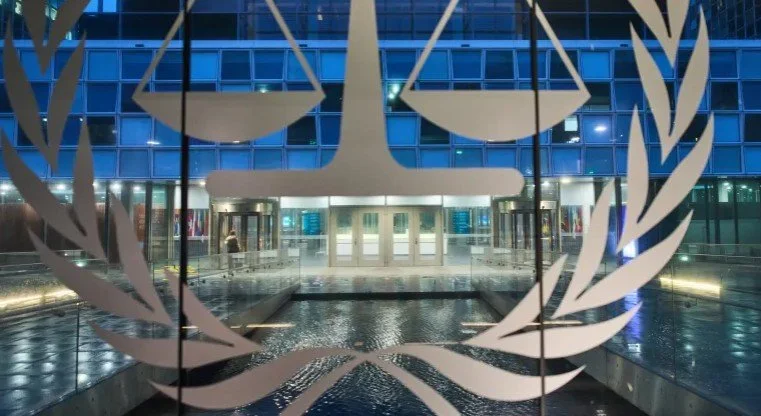
An exterior view of the International Criminal Court in The Hague, Netherlands
Dear friends and supporters,
This debate over the ICC is not merely about one international institution—it is about a centuries-long struggle to establish the rule of law over the rule of the powerful.
Our modern legal and political order is built on a foundation that stretches from the Magna Carta, through the Glorious Revolution and the Declaration of Independence, to the U.S. Constitution and the creation of the United Nations. Each step marked a milestone in restraining unchecked power and establishing that even leaders must be held accountable to law. The ICC is the latest link in this chain: a global effort to ensure that war crimes and crimes against humanity cannot be committed with impunity.
The Trump administration's campaign to dismantle the ICC seeks to turn back the clock to an era before these hard-won principles—a return to the law of the jungle, where, as the ancient adage says, “the strong do what they can and the weak suffer what they must.”
If we abandon international justice, we risk unraveling the progress made since Magna Carta first proclaimed that even kings are subject to law.
That is why we must fight for change and resist attempts to undermine global accountability.
I am proud to support Rep. Ilhan Omar’s leadership in Congress, where she is championing legislative efforts to defend the ICC and uphold the legacy of the rule of law. The stakes could not be higher, and history will judge our willingness to stand with the principles that have guided us for centuries.
As a former candidate for Congress, I remain committed to the principle that the rule of law must be paramount and that nobody—not presidents, the wealthy, nor the powerful—is above it.
Today, we face a troubling escalation: President Donald Trump and his allies are seeking to undermine legal progress that has taken centuries to build. Their campaign against the International Criminal Court (ICC) is the latest effort to erode global accountability and shield those in power from justice.
The current administration has intensified its opposition to the ICC, vowing to dismantle the institution “brick by brick.” Secretary of State Marco Rubio has described the ICC as an overreaching body of “unelected globalist bureaucrats,” claiming it threatens U.S. sovereignty and security.
However, this rhetoric serves as a smokescreen for shielding American officials and military actions from international legal standards.
The Impact of U.S. Sanctions
Through executive orders, the administration has imposed severe sanctions on ICC staff, including the chief prosecutor and judges.
These measures go far beyond travel bans, creating a climate of fear and legal risk for domestic organizations and advocates.
Chilling Effect on Advocacy: Human rights groups, such as DAWN, have been forced to self-censor and suspend cooperation with the ICC to avoid federal prosecution.
Under current sanctions, even providing "services" to targeted individuals is a potential crime.
Constitutional Challenges: Multiple legal challenges argue these sanctions violate the First Amendment, infringing on Americans’ rights to advocate for human rights and communicate with international judicial bodies.
To date, federal judges have often sided with plaintiffs, ruling that the enforcement of these sanctions exceeds government authority.
Accountability vs. Impunity
Critics, including war crimes prosecutor Reed Brody, contend that the U.S. assault on the ICC is less about defending sovereignty and more about creating an “insurance policy” against accountability for potential war crimes.
Shifting Global Norms: Whereas past administrations often maintained at least a veneer of respect for international law—even when violating it—the current administration has openly attacked the court’s legitimacy, discarding even the pretense of respect.
Targeting Infrastructure: Experts warn that threats against civilian infrastructure, such as desalination plants, mirror the very war crimes the ICC is meant to investigate—potentially setting the stage for future legal conflict.
Key Defenders in Congress
While opposition to U.S. submission to the ICC has historically been bipartisan, progressive Democrats in Congress are now actively pushing back—defending the tribunal’s mandate and challenging executive sanctions:
Rep. Ilhan Omar (D-MN): Leading the legislative resistance, Omar introduced a House resolution directly responding to Rubio's campaign. The resolution calls on the U.S. to become a full member of the ICC by ratifying the Rome Statute and demands the immediate revocation of executive sanctions and visa bans on ICC staff. Omar publicly characterized Rubio's threats as "reckless and dangerous," arguing that dismantling the court undermines global accountability.
Congressional Co-Sponsors: Joining Omar's push to protect the ICC and preserve U.S. support for international justice are Democratic Representatives André Carson (D-IN), Rashida Tlaib (D-MI), Jesús "Chuy" García (D-IL), and Nydia Velázquez (D-NY).
Broader Democratic Posture: While bipartisan lawmakers have supported ICC investigations into Russian war crimes in Ukraine, key congressional Democrats warn against dismantling the court entirely.
Instead, they advocate for selective engagement, ensuring that war crimes elsewhere do not go unpunished.
A Hopeful Path Forward
Despite the challenges before us, the long arc of history bends toward justice. Our commitment to the rule of law—rooted in centuries of struggle and sacrifice—remains unbroken. With courageous leaders in Congress and a public that refuses to let power go unchecked, we can defend and strengthen the institutions that protect human rights and dignity.
Let us continue to push for change, uphold the legacy of those who fought for justice before us, and ensure that future generations inherit a world governed not by the law of the jungle, but by the rule of law for all.
In Solidarity,
Gamy Enriquez, MPA
Sources
Rep. Ilhan Omar Official Press Release: Resolution Urging U.S. to Join ICC (July 2026)
Wall Street Journal / Just Security: Analyzing Secretary Rubio's ICC Op-Ed (July 2026)
Council on Foreign Relations: Dismantling the ICC Without an Alternative Is Not the Answer (July 2026)
Al Jazeera / Truthout: Congressional Pushback Against Executive ICC Sanctions (July 2026)