Confronting the Crisis of Our Conscience: What History Will Remember About Us
“The hottest places in hell are reserved for those who, in times of great moral crisis, maintain their neutrality,”
Friends,
Across the United States, a troubling tide is rising—one that threatens the very core of who we are as Americans. Under the Trump administration, the treatment of undocumented people of Mexican and Latin American descent has reached new levels of inhumanity. Families are being torn apart, children are separated from their parents, and entire communities live in fear. This is not just a policy misstep; it is a moral crisis. And as we look back at history, we must draw parallels to the darkest chapters we swore never to repeat.
It is impossible to ignore the haunting echoes between what is happening today and what transpired in Germany under Hitler’s regime. In the 1930s and 40s, Jews and other minorities—Roma, disabled people, LGBTQ individuals, political dissenters—were systematically dehumanized, scapegoated, and stripped of their rights. The machinery of state power was turned against them, fueled by propaganda that cast these communities as threats, as lesser, as “other.”
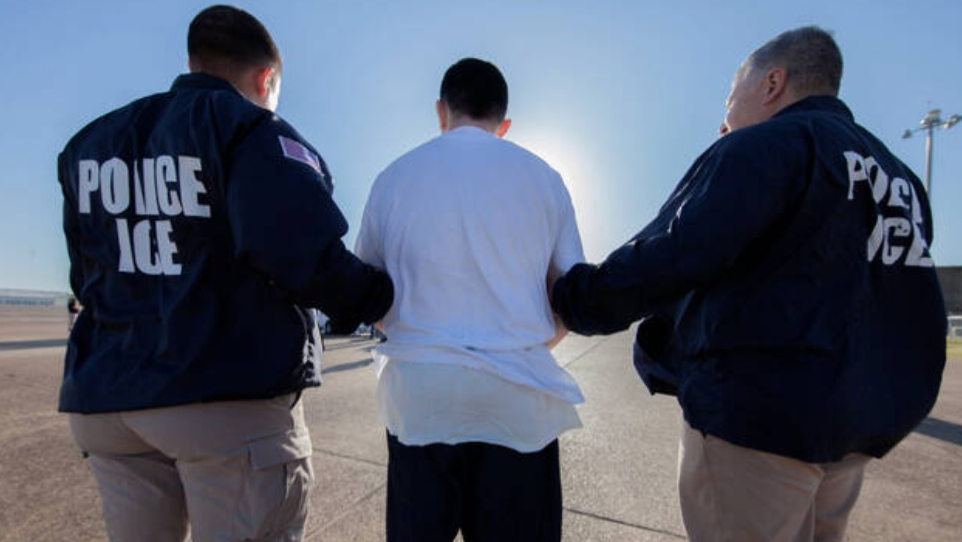
Today, in America, we witness a similar process of othering. The language has changed, but the intent is chillingly familiar. Undocumented immigrants are labeled as criminals, as invaders, as burdens on society. ICE raids descend on neighborhoods, detaining mothers, fathers, and children. Detention centers overflow. The cruelty is not incidental—it is deliberate, designed to instill terror and to send a message: you do not belong.
CNN correspondent Isobel Yeung recently traveled to the Central African Republic, which in recent months has accepted dozens of immigrants who had previously been granted deportation protections because they risk facing torture in their home countries. Despite the fact that the State Department warns U.S. citizens not to travel to the Central African Republic “under any circumstances,” these deportations continue.
We tell ourselves: “It can’t happen here.” But it is happening here. And it flies in the face of everything America claims to stand for. Our nation was founded on the ideals of democracy, freedom, and human rights. We are a country of immigrants—people who came here seeking safety, opportunity, and a chance to build a better life. To turn our backs on the most vulnerable among us is to betray not only them, but ourselves.
Let us be clear: this is not a question of left or right. It is a question of right and wrong. When we close our eyes to the suffering of others, when we allow our leaders to weaponize fear and division, we become complicit in injustice. History has shown us where this road leads. In Germany, the world watched as the unthinkable unfolded—because too many people stayed silent, because others believed it could never happen to them, because the machinery of hate was allowed to run unchecked.
But the damage goes beyond our moral standing. The Trump administration’s assault on immigrants is also an attack on our economy and our collective well-being. Immigrants—documented and undocumented—are the backbone of our agricultural sector, our service industries, our small businesses. They pay taxes, start companies, create jobs, and contribute billions each year to Social Security and Medicare—programs they themselves may never benefit from. When we drive these individuals into the shadows, we weaken our own communities, stifle innovation, and shrink our economic potential.
Let us not be distracted. The rhetoric of division, the demonization of immigrants, is not just cruel—it is a smokescreen. According to Third Country Deportation Watch, the United States has signed so-called third-country deportation agreements with as many as 35 governments around the world. Most of the over 20,000 people deported under these agreements have been turned back at ports of entry to Mexico, but an increasing number are being placed on deportation flights and sent to countries like Costa Rica and Ghana, far from their countries of birth. While we are told to fear our neighbors, trillions of dollars are being transferred to the wealthiest 1%—a historic redistribution of wealth upwards, orchestrated through tax cuts, deregulation, and the systematic dismantling of protections for ordinary Americans. The real theft is happening in plain sight, while our attention is diverted by the politics of fear and resentment.
Ask yourself: Who benefits from this distraction? Who profits when we are divided, suspicious, and afraid? It is not the average American worker, not the single mother working two jobs, not the small business owner trying to make payroll. The winners are those at the very top—those who have always benefited from a system that pits us against one another while they write the rules.
We are at a crossroads. In 20 or 40 years, how will history judge us? What will our children and grandchildren say when they look back at this moment? Will they see a generation that stood by while others suffered, or one that rose to the challenge, that reclaimed the promise of America for all its people?
Each of us has a choice to make. Silence is not neutrality—it is complicity. The time to act is now. Speak out against inhumane policies. Demand accountability from your representatives. Support organizations that defend immigrant rights and fight for justice. Reach out to your neighbors, build bridges, and refuse to be divided by fear.
America’s story is not yet finished. The arc of history bends only when we—ordinary people—have the courage to pull it toward justice. Let us not be remembered for our silence, but for our solidarity. Let us not fail the test of our time. The world is watching. More importantly, our children are watching. What will you do?
This is why I am running for Congress in 2028: to fight for reparations inspired by those long overdue for African Americans, and to demand reparations for Mexican and Latin Americans as a result of the injustice of the Monroe Doctrine. These reparations must be economic, political, and symbolic. The work starts now. Join this movement.
In Solidarity,
Gamy Enriquez, MPA