Breaking the Cycle: Solving the $40 Trillion Debt with a VAT, Green Marshall Plan for Peace, Equity, and Sustainability
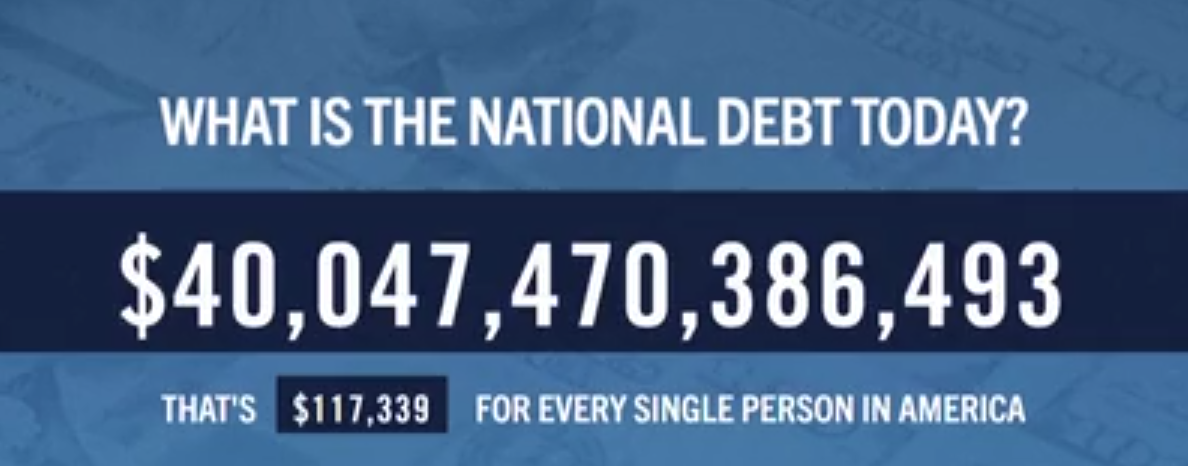
Source: Peter G. Peterson Foundation
Friends,
Recent geopolitical tensions, specifically the U.S. conflict with Iran, have triggered severe economic ripple effects. The closure of the Strait of Hormuz has disrupted global shipping, forcing companies to seek alternative, highly expensive routes.
• Increased Shipping Costs: The cost of passage through the Panama Canal has escalated dramatically, rising by a factor of 100 since the beginning of the year.
• Inflationary Pressure: These heightened logistical costs are directly passed on to consumers, contributing to broader inflationary trends that impact the cost of living and fuel prices.
Debt, Bonds, and the Wealth Gap
We have arrived at a critical state of the U.S. national debt, which has recently reached 40 trillion. I believe this is a result of long-standing political choices rather than unavoidable circumstances.
• The Burden of Interest: A trillion dollars of the federal budget is now dedicated solely to interest payments on the national debt. This diverts public funds away from essential services like infrastructure, education, and healthcare.
• Wealth Redistribution: Instead of taxing the wealthy, the government borrows from them. Consequently, tax dollars from the public are funneled to the wealthy and foreign creditors in the form of interest payments.
• Market Impact: The mass selloff of U.S. government bonds and the resulting increase in interest rates crowd out the private mortgage market, making home ownership significantly more difficult and expensive for everyday citizens like my family and our neighbors.
The Perception of American Exceptionalism
I view the current economic climate within the historical context of a declining empire. The U.S. benefited from unique, favorable conditions following World War II—such as the destruction of other industrial powers and the geographic protection of two oceans—which led to an era of prosperity that was never meant to be permanent.
Denial of Reality: I see the current administration's approach as a form of "theatrical" denial, where aggressive policies are used to project strength despite an inability to sustain past levels of global dominance.
Unsustainable Path: By failing to prepare for a changing global landscape and continuing to increase war spending without raising revenue, our government is pursuing an unsustainable trajectory.
We are witnessing a convergence of rising debt, inflationary war costs, and systemic economic inequality. I warn that the U.S. government’s current policy choices, driven by a reluctance to address the realities of a declining empire, are leading the nation toward a state of economic instability and inevitable financial strain.
These macro-level shifts aren't abstract—Nevadans feel them every day at the gas pump, at the grocery checkout, and when trying to buy a first home. We cannot afford to keep funneling public wealth into endless geopolitical conflicts while working families bear the brunt of inflation and skyrocketing interest rates. It is time to bring our resources back home: tax ultra-wealthy financial speculators, rebuild our domestic infrastructure, and invest directly in our local communities. True national strength isn't measured by foreign military footprint, but by the economic stability of our households.
This is why I am running for Congress on a platform that includes implementing a Value-Added Tax (VAT). The United States is the only country in the OECD that does not have a VAT—a type of consumption tax levied at each stage of production and distribution only to luxury goods mining industry and the billionaire tech industry, which is what I propose. A VAT is important because it creates a stable, broad-based source of revenue that can fund transformative investments without putting a disproportionate burden on working families.
With a VAT, we have the opportunity to launch a Green Marshall Plan: a full ecosystem approach to transition our economy to clean, renewable energy. Nevada can lead this transformation because of our unique lithium loop—our state’s resources are essential for the batteries that power the clean energy revolution. By capturing the profits from this value chain, we can fund a $1,300 monthly transfer to every American, paid for by the profits of our natural resources—just as Norway uses its sovereign wealth fund to ensure that when their oil runs out, the nation’s wealth remains for future generations.
Likewise, when Nevada’s lithium and other critical minerals are eventually depleted, the wealth generated will be preserved and enjoyed by Americans for generations to come. This is how we build lasting prosperity, climate resilience, and a fairer economy for all.
In Solidarity,
Gamy Enriquez, MPA