“Why should the Arabs make peace? If I were an Arab leader, I would never sign an agreement with Israel. It is normal; we have taken their country. It is true God promised it to us, but how could that interest them? Our God is not theirs. There has been anti-Semitism, the Nazis, Hitler, Auschwitz, but was that their fault? They see only one thing: we have come and stolen their country. Why would they accept that?”
Friends,
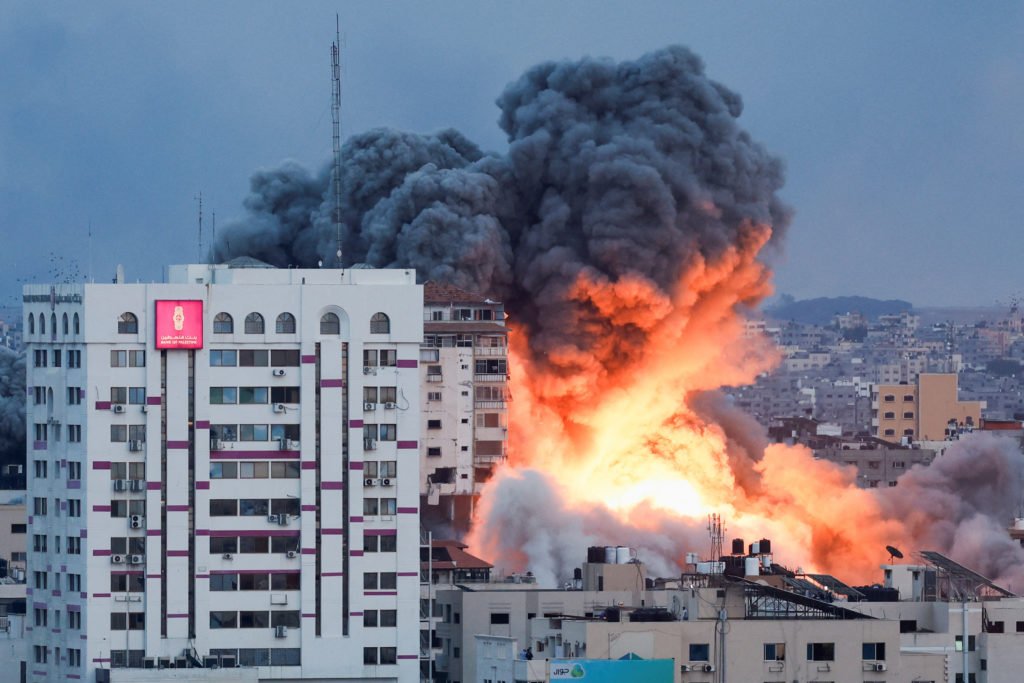
In the wake of the October 7, 2023, Hamas attack on Israel, much of the public commentary has framed the incident as an unprovoked act of genocidal antisemitism, often drawing direct parallels to the horrors of the Holocaust. Yet, in a thought-provoking lecture, Professor John Mearsheimer urges us to look beyond the surface and examine the deeper historical and political context that precipitated this tragic event. His analysis provides a vital lens for understanding not only the attack itself but also the broader dynamics of the Israeli-Palestinian conflict.
Historical Context: The Creation of Israel and Its Aftermath
Mearsheimer begins by challenging widely held misconceptions about the history of the region. Contrary to the early Zionist narrative of Palestine as “a land without people,” the territory was in fact already home to a substantial Palestinian population. The creation of Israel in 1948, he notes, was not simply the fulfillment of a national aspiration for Jews fleeing persecution but also an act that required the displacement and dispossession of the indigenous Arab community. Early Zionist leaders, including David Ben-Gurion and Ze'ev Jabotinsky, openly acknowledged that the establishment of a Jewish state would involve the removal of the local population. This foundational reality, Mearsheimer argues, set the stage for decades of conflict and resentment.
Israeli Strategies and the Palestinian Experience
Over the decades, Israel has implemented a series of strategies to manage the Palestinian population. Mearsheimer highlights three principal approaches: the “Iron Wall” strategy, which emphasizes the use of overwhelming force to quell resistance; the widespread ethnic cleansing that occurred during and after 1948; and the creation of isolated Palestinian enclaves, often compared to South Africa’s “Bantustans.” Today, the Gaza Strip stands as a stark symbol of these policies. Encircled by a restrictive blockade, Gaza is frequently described as an “open-air prison.” Its inhabitants endure not only severe limitations on movement and commerce but also periodic military campaigns—often euphemistically referred to as “mowing the lawn”—that inflict heavy civilian casualties and destruction.
Interpreting the October 7th Attack
Against this backdrop, Mearsheimer argues that the October 7th attack by Hamas should not be viewed merely as an eruption of blind hatred. Rather, he contends, it represents a desperate act by a population subjected to unbearable conditions and denied the most basic human rights. From this perspective, the attack can be seen as a “breakout” attempt—an uprising by “inmates” of the Gaza “prison” seeking to reclaim their freedom and dignity. This interpretation does not justify violence against civilians, but it does situate the events within a broader history of resistance to occupation, a phenomenon witnessed in numerous contexts throughout the world.
The Legal Dimension: Resistance Under International Law
Mearsheimer also invokes international law to frame the actions of Hamas. According to the laws of armed conflict, he argues, an occupied people have the legal right to resist occupation, including through armed struggle. Since Israel maintains effective control over Gaza—despite its 2005 withdrawal—the territory remains, in the eyes of international law, under occupation. Thus, from this legal standpoint, the Palestinian resistance, however controversial, has a recognized basis in international norms.
“The Legitimate Right to Resist Military Occupation (Jus ad Bellum)
Proponents arguing for the legal framing of Palestinian armed resistance cite international instruments establishing the right of self-determination and resistance against foreign occupation:
UN General Assembly Resolutions: UNGA Resolution 37/43 (1982) reaffirms “the legitimacy of the struggle of peoples for independence, territorial integrity, national unity and liberation from colonial and foreign domination and foreign occupation by all available means, including armed struggle”.
Protocol I to the Geneva Conventions (1977): Article 1(4) recognizes armed conflicts in which peoples are fighting against colonial domination, alien occupation, or racist regimes in the exercise of their right of self-determination.
Self-Defense and Ending Blockade: From this perspective, attacks directed against military outposts, bases, or combatants are framed as legitimate military actions aimed at breaking an illegal blockade or ending military occupation.”
Moving Forward: The Need for Honest Dialogue
Simplistic narratives that reduce a complex historical struggle to matters of pure good and evil is misleading. Only by acknowledging the realities of occupation, dispossession, and resistance can policymakers and citizens alike hope to chart a course toward a just and lasting peace. Mearsheimer’s analysis does not excuse acts of violence, but it does challenge us to confront the root causes of conflict and to seek solutions grounded in empathy, justice, and historical understanding.
As the world grapples with the aftermath of the October 7th attack and the ongoing humanitarian crisis in Gaza, Mearsheimer’s insights serve as a reminder of the importance of rigorous analysis and honest debate. Understanding the past is not merely an academic exercise; it is a prerequisite for building a more peaceful future.
In Solidarity,
Gamy Enriquez, MPA