Friends,
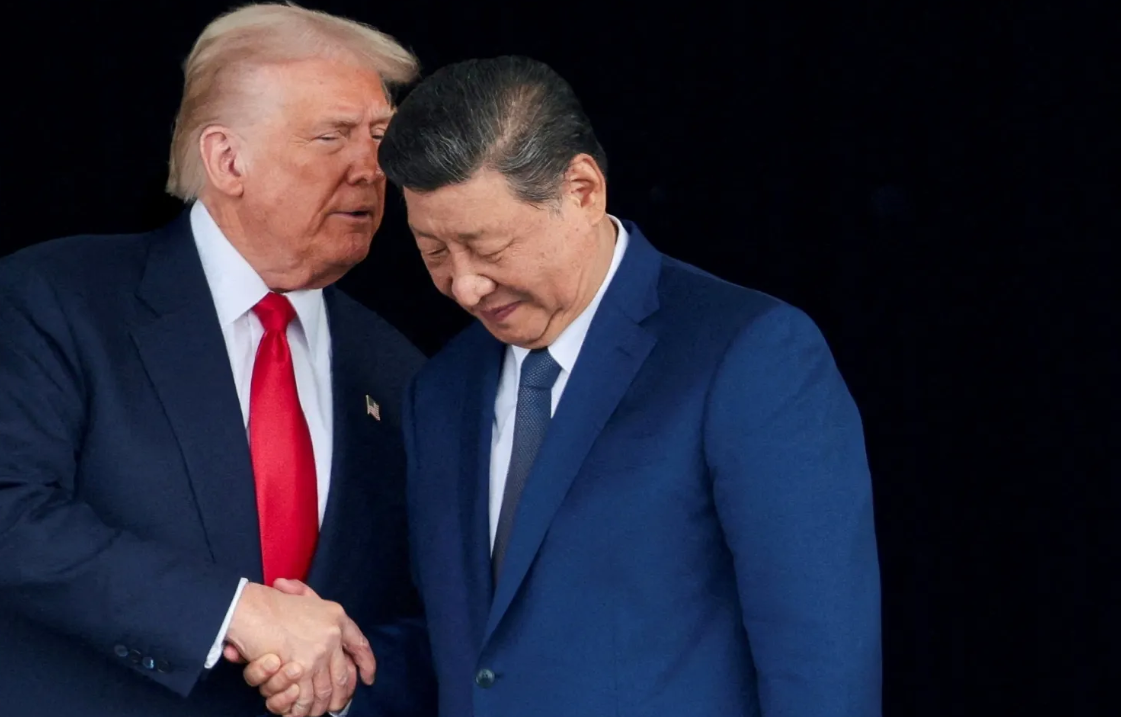
I spent the last few days dissecting the latest three-day summit between President Trump and President Xi Jinping in Washington, D.C., and I keep coming back to the same conclusion: despite the polished handshakes and diplomatic theatre, we are watching an inescapable rivalry play out in real time.
Many commentators—including The Economist—were quick to brand the summit a "dereliction of duty" for failing to deliver breakthroughs on the defining global crises of our decade. But I think that verdict misses the broader picture. Expecting a major diplomatic breakthrough between the United States and China right now isn't just optimistic; it fundamentally misunderstands the structural mechanics driving both capitals. When two great powers are locked in a zero-sum struggle for regional and global dominance, summits are not designed to forge lasting peace—they are designed to manage the friction so neither side accidentally sets off an explosion.
The Five Issues Defining the Rift
When I break down the agenda discussed behind closed doors in D.C., the fundamental incompatibility of our strategic goals becomes immediately clear.
First, Taiwan. Beijing reiterated its long-standing stance, demanding an end to U.S. arms shipments and an explicit commitment against Taiwanese independence. From Xi's perspective, Taiwan is sacred territory. But from Washington’s perspective, Taiwan is the geographic lynchpin that bottles up Chinese naval power within the first island chain. If the U.S. abandons Taipei, our regional allies lose faith in American security guarantees, and the entire containment strategy crumbles. Unsurprisingly, no concessions were made.
Second, Iran. Washington pushed Beijing to use its leverage over Tehran to help settle the ongoing conflict. But why would China help us out of a jam? From where Beijing sits, every carrier group and missile defense battery we deploy to the Middle East is one less asset watching the Taiwan Strait. China is actually incentivized to see us remain pinned down in a protracted regional war.
Third, Ukraine. The U.S. requested Chinese assistance in pressuring Moscow to end the war. Given the deepening "no-limits" partnership between Beijing and Moscow, China has a vested interest in seeing Russia prevail against Ukraine and its Western backers. A weakened, distracted West suits Beijing's strategic calculus just fine.
Fourth, Artificial Intelligence. Right now, we are locked in an intense AI arms race, and neither nation has any immediate interest in curbing its technological development. Both leaders view military and economic AI dominance as essential for securing future superiority, so neither side is willing to accept artificial limits. However, I maintain that cooperation remains a real possibility down the line. If AI technology were to slip out of control and threaten catastrophic, existential damage to both nations, we would quickly develop a strong, mutual incentive to collaborate. Under conditions of such shared risk, both Washington and Beijing would likely find it in their best interest to strike a formal agreement to mitigate global disaster.
Fifth, Trade. This was the only area of limited progress. After a volatile tit-for-tat tariff war that highlighted China’s near-total monopoly on rare earth minerals—a critical leverage point—both sides managed to establish a basic modus vivendi. They agreed to extend truce terms and lower tariffs on roughly $60 billion in agricultural and commercial goods. It’s a modest patch, but far from a permanent fix.
The Failed Pivot and Strategic Reality
What struck me most while evaluating this summit is how drastically our domestic distractions sabotage our long-term grand strategy. Since 2017, the global system has shifted from a unipolar American moment to a multipolar reality defined by intense great-power competition. "Liberal hegemony" is dead, replaced by a bipartisan consensus on containment.
Yet, our strategy remains deeply flawed. For over a decade, American strategists have preached the necessity of a "Pivot to Asia." But our ongoing entanglements in the Middle East continue to derail that vision. Look at what happened with the deployment of heavy military assets: vital Patriot missile defense batteries were pulled out of East Asia to support Middle East operations, and the USS George Washington aircraft carrier was redeployed away from Japan.
Beijing sees this strategic overextension clearly. By keeping the United States distracted and financially strained abroad, China gains precious space to strengthen its position in the Indo-Pacific without facing the full, undivided weight of American military power.
What This Means for Everyday Americans and Nevadans
While foreign policy experts treat these global chess games as an abstract exercise, everyday Americans and families across Nevada are paying the real price. Endless military posturing and foreign entanglements consume hundreds of billions of dollars—resources that ought to be strengthening our domestic economy, rebuilding infrastructure, and lowering the high cost of living at home.
We must step back and break out of this destructive zero-sum mentality. History offers a clear lesson here: when President Richard Nixon and Henry Kissinger famously opened diplomacy with China in 1972, the underlying driver was to rebalance global power and position America to compete economically rather than getting dragged into endless military friction. That economic pivot is precisely what allowed China to build its industrial base and ultimately become the world’s manufacturing powerhouse.
If we want to protect American workers and lower costs for Nevadans, we cannot rely on military posturing alone. We must return to what made this nation strong: competing fiercely on economic productivity, technological innovation, supply chain resilience, and domestic manufacturing. Treating every global interaction as a zero-sum military threat drains our treasury, raises prices for everyday consumers, and starves our communities of necessary investment.
Where We Go From Here
We need to be clear-eyed about what lies ahead. While trade ties will endure out of economic necessity—much like the economic links between European rivals prior to World War I—the underlying security competition is going to intensify.
The temporary warm rhetoric coming out of Washington is largely driven by President Trump's immediate domestic considerations and the pressing complications of the ongoing conflict in Iran. But the underlying structural friction hasn't gone away. As long as Washington and Beijing view each other as direct threats to their vital national interests, meaningful cooperation will remain minimal, and relations will almost certainly continue to deteriorate as these strategic conflicts remain unresolved.
My campaign for Congress was never about a single election or a single seat—it is about a shared commitment to building stronger, more resilient communities across Nevada and America. The work we have started together in 2026 proves that when we focus on real solutions, such as my Green Marshall Plan, practical progress, and listening to one another, there is no challenge we cannot meet.
As I look ahead toward representing our vision in Congress in 2028—I am filled with unwavering optimism. The energy, courage, and heart of the people I meet every day remind me of what is possible when we lead with purpose and look forward together. This is only the beginning of our journey, and the best days for our community and our nation are still ahead of us. Thank you for standing with me, believing in this mission, and proving that our future is bright.
In Solidarity,
Gamy Enriquez, MPA
2028 Congressional Candidate
Nevada’s Second Congressional District