Friends,
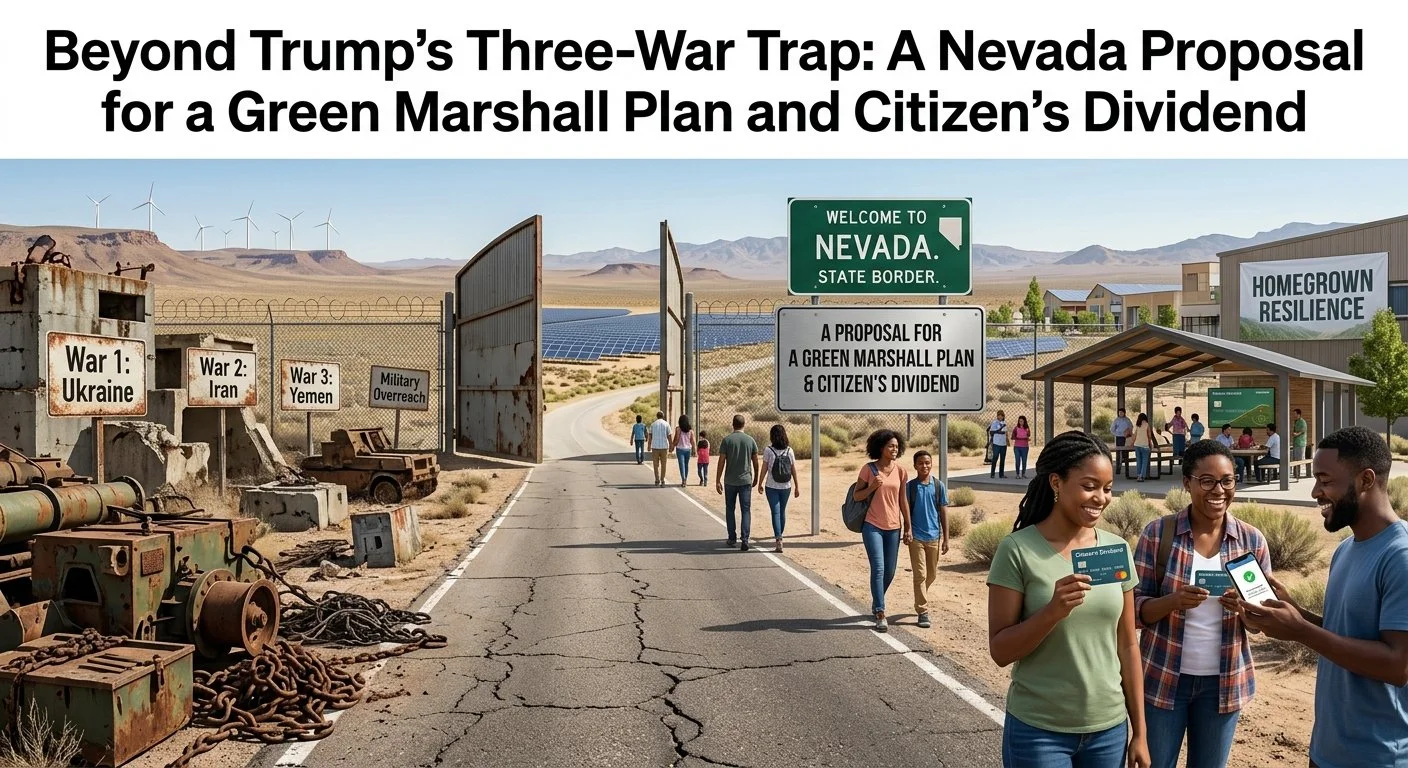
In this newsletter, I analyze the precarious geopolitical landscape facing the United States under President Donald Trump. I argue that Trump’s administration has become mired in three distinct, "disastrous" conflicts, each of which the U.S. is poised to lose.
The Three Conflicts
The War in Ukraine: Initially inherited from the Biden administration, I contend that Trump has fully "owned" this war by his second year. Despite initial efforts to end it, the conflict remains a grinding war of attrition where Russia maintains a slow, steady advance. I predict a future as a "dysfunctional rump state" for Ukraine and a strategic defeat for NATO.
The War Against Iran: Triggered by a joint U.S.-Israeli attack on February 28, 2026, this conflict began with a 40-day strategic bombing campaign. Subsequent blockade and "tit-for-tat" strategies have failed to force a surrender. Currently, the U.S. is pursuing the "Besson strategy"—an attempt at complete economic strangulation—which I deem unsuccessful.
The Saudi–Houthi War: Encouraged by Trump, Saudi Arabia re-initiated hostilities against the Houthis on July 13, 2026. I identify this as a strategic blunder, noting that the Houthis have effectively gained the upper hand, putting the Saudis in a vulnerable, defensive position.
Key Strategic Risks
Escalation Dynamics: Each conflict carries a high risk of escalation—either horizontal (other regional powers joining, such as Egypt and Turkey in the Yemen conflict) or vertical (increased intensity within a conflict, like the air war in Ukraine or potential oil infrastructure attacks in the Gulf).
Economic Impact: The ongoing wars are placing significant stress on the global economy, particularly through the disruption of oil and gas shipping lanes in the Persian Gulf and Red Sea, where insurance costs have spiked dramatically.
The "Frozen Conflict" Reality: I assert that none of these wars have a viable "win-win" resolution. Instead, I warn that all three are trending toward permanent "frozen conflicts" characterized by hostility, the potential for nuclear proliferation (especially in the Iran and Saudi scenarios), and ongoing insecurity.
Great Power Context: These are not isolated skirmishes. They are deeply linked to broader security competition between the U.S., China, and Russia. I note that U.S. policies have inadvertently driven adversaries—including North Korea, Iran, and China—into a closer, more unified alignment.
Conclusion
I conclude that Trump lacks a coherent strategy to end these wars on favorable terms. I draw an analogy to the Vietnam War, suggesting that these "losing wars" could have severe consequences for Trump's presidency, potentially leading to a political downfall similar to that experienced by LBJ or Richard Nixon.
This fundamental breakdown in American strategy is why I am running for Congress on a Green Marshall Plan platform. By shifting our national focus away from endless foreign interventions and military overextension, a Green Marshall Plan would reallocate our vast resources toward domestic economic resilience, climate infrastructure, and energy independence. Crucially, funding a Freedom Dividend, Citizen's Dividend, or Universal Basic Income (UBI) through this framework ensures that every American directly shares in the economic stability produced by this transition. Rather than squandering trillions on unwinnable overseas conflicts that destabilize global markets, a Green Marshall Plan reinvests that wealth directly into working families—securing our national interest at home while fostering long-term stability and sustainable peace abroad.
In Solidarity,
Gamy Enriquez, MPA