The New Axis of Instability: Are We Facing Global Conflict?
Friends,
In this essay, "The New Axis of Instability: Are We Facing Global Conflict?", I examine the dangerous convergence of global flashpoints that threatens to pull humanity into an all-out global conflict. Drawing historical parallels to 1914—when European powers accidentally escalated localized crises into a catastrophic world war—I argue that the contemporary international order is rapidly fracturing under the weight of regional wars, interconnected revisionist autocracies, and deteriorating diplomatic guardrails.
Key Themes & Core Arguments
The Interconnected "Axis of Discontent"
A major premise of my essay is that today’s global instability can no longer be viewed as a series of isolated regional crises. I highlight the growing alignment among four major revisionist powers: Russia, China, Iran, and North Korea.
Shared Ambition: While these nations do not form a formal military alliance akin to NATO, they are deeply united by a shared goal: dismantling the US-led international security order and pushing back American influence.
Mutual Support: I underscore how these powers actively bolster one another’s war machine—whether through Iranian drone exports, North Korean ammunition transfers, Chinese dual-use technologies, or Russian technical assistance. Consequently, an escalation in one theater (such as Eastern Europe or the Middle East) directly impacts strategic balances across other regions.
Simultaneous Regional Flashpoints
I analyze three active or high-risk arenas that could spark a broader systemic war:
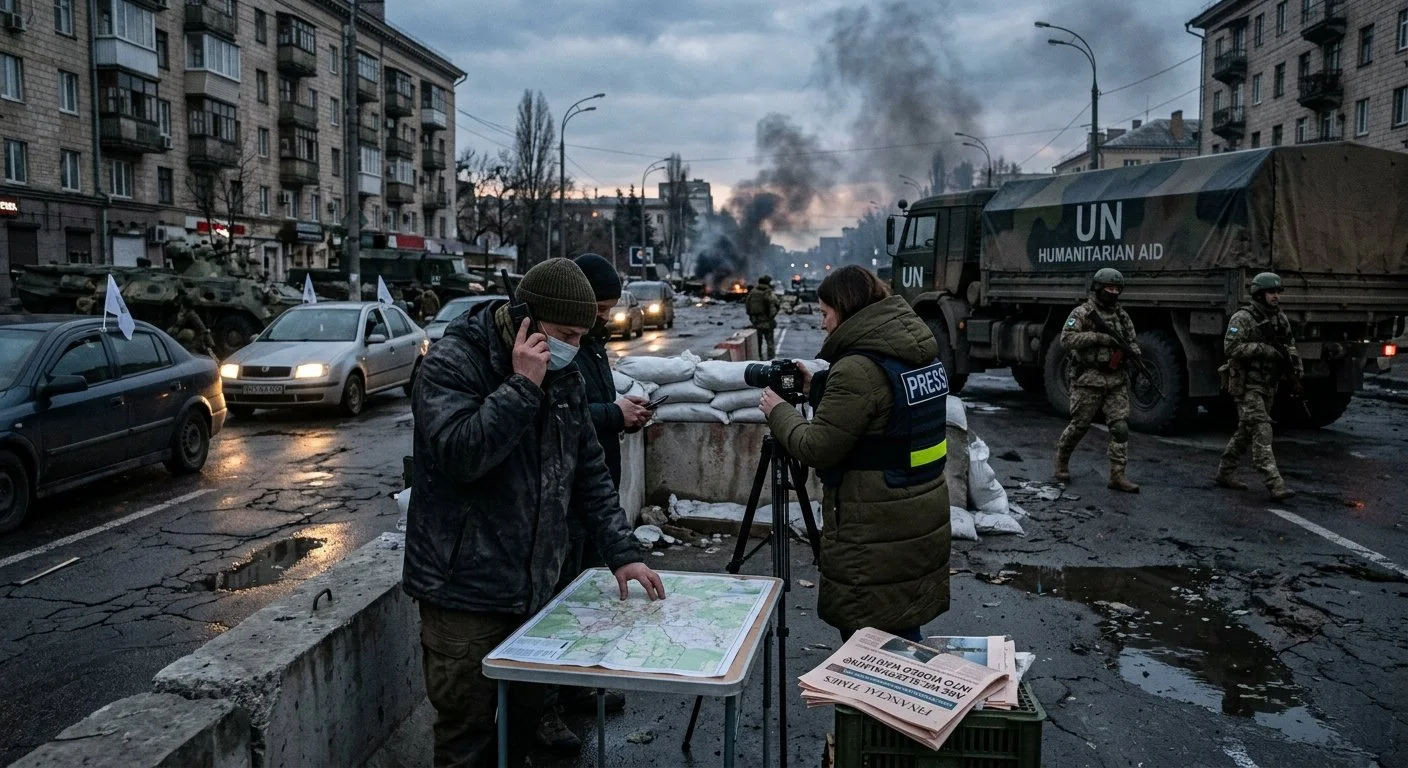
The War in Europe: The ongoing conflict in Ukraine has fundamentally altered European security. Russia's willingness to challenge borders by force and test NATO's resolve creates a perpetual risk of direct military confrontation between nuclear-armed superpowers.
Escalation in the Middle East: Expanding hostilities involving Iran, Israel, and regional proxy networks have dragged US military forces deeper into protection duties and retaliatory strikes, threatening a full-scale regional conflict.
The Indo-Pacific Powder Keg: The growing risk of conflict over Taiwan or in the South China Sea remains the most dangerous potential trigger for a world war. A collision between US and Chinese forces would instantly turn regional strife into a war between super-economies.
The Breakdown of Guardrails and Deterrence
During the Cold War, Washington and Moscow established formal hotlines, arms control treaties, and tacit red lines to prevent accidental nuclear escalation. Today, I warn, those diplomatic safety nets have almost completely unraveled.
The erosion of international legal norms, combined with volatile domestic politics in Western democracies and aggressive strategic posture in autocratic regimes, leaves little room for crisis management. Small miscalculations, radar errors, or accidental military engagements could quickly spiral out of control before diplomacy can intervene.
"Sleepwalking" vs. Long-Term Strategy
Addressing historical analogies, I explore whether world powers are genuinely "sleepwalking"—unaware of the catastrophic risks—or whether revisionist leaders are intentionally pushing the boundaries of aggression while banking on Western reluctance to escalate. I suggest that while leaders may believe they can manage limited wars, history proves that conflict dynamics often escape human control once national pride, alliance commitments, and survival instincts take over.
Takeaways & Strategic Conclusion
Systemic Interdependence: Modern conflicts are tightly coupled. A crisis in the Middle East draws US resources away from Europe and the Indo-Pacific, creating windows of opportunity for aggressors elsewhere.
The Nuclear Shadow: Unlike World War I, any global war today would be fought in the shadow of massive nuclear arsenals, dramatically raising the stakes of miscalculation.
A Call for Deterrence & Diplomacy: I conclude that avoiding a third world war requires Western nations to rebuild credible military deterrence while simultaneously re-establishing high-level diplomatic communication channels with adversaries to manage friction before missteps become catastrophic.
In Solidarity,
Gamy Enriquez, MPA