The Escalation of Global Geopolitical Tensions
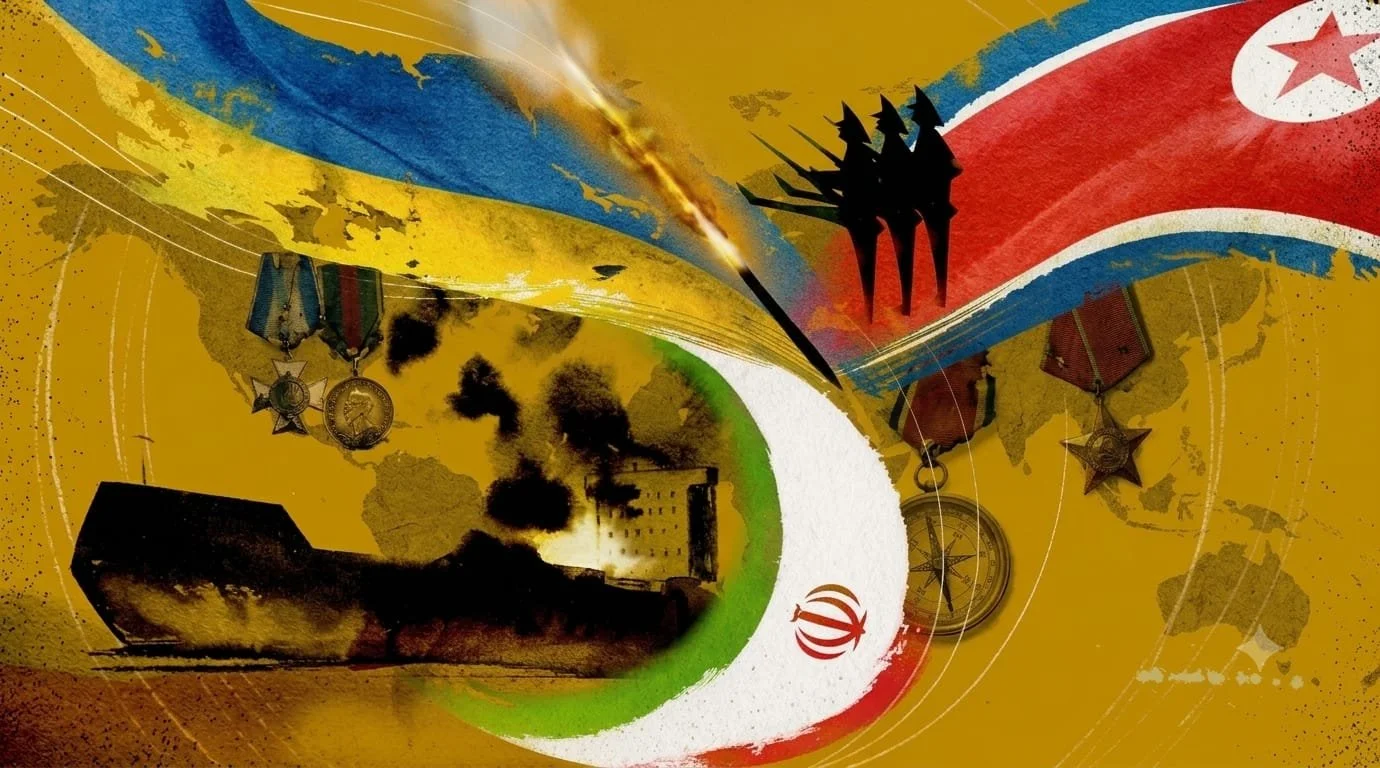
“It is easier to make war than to make peace””
Friends,
The world is currently witnessing a troubling convergence of regional conflicts that, while once distinct, are increasingly overlapping into a broader, interconnected global crisis.
The Global Landscape of Conflict
The international community is currently grappling with three primary zones of instability. The ongoing war in Ukraine remains the most intense conflict in Europe since 1945, while the Middle East is facing its most widespread warfare in decades, involving a dozen nations. Simultaneously, East Asia has become a flashpoint, characterized by North Korea’s military expansion and China’s aggressive posturing toward Taiwan.
The Rise of an "Axis of Adversaries"
Strategic analysts are increasingly observing a tightening alignment between four key nations that share the objective of weakening American influence:
Common Objectives: Russia, China, Iran, and North Korea are united by the goal of dominating their respective neighborhoods and challenging the existing global order.
Mutual Support: These nations provide each other with vital resources, ranging from North Korean troops and Iranian drones for the Russian war effort to Chinese microelectronics and technology that accelerate Russia’s military recovery.
The "Thucydides Trap": China’s ambition to displace the United States as the world's preeminent power mirrors historical patterns where rising powers clash with established ones, creating significant risks of accidental or calculated escalation.
Signs of Interconnection
The boundaries between these regional conflicts are thinning, creating a more cohesive global theater of war. Recent developments illustrate this shift:
Direct Confrontation: Ukraine’s reported strikes on Iranian ships in the Caspian Sea represent a significant departure, as Kyiv directly engages a supplier of the Russian military.
Escalation Risks: The reported deployment of 30,000 North Korean troops to support Russia elevates the conflict’s global stakes, as noted by President Zelenskyy.
Strategic Calculations: Kyiv’s actions may be driven by a desire to illustrate to the international community—including the U.S. administration—that these conflicts are part of a singular, interconnected struggle against a unified group of adversaries.
Conclusion
While major powers like the U.S. and China appear to be actively trying to manage their intense rivalry, history suggests that the combination of localized conflicts and strategic miscalculations can rapidly spiral out of control. The growing collaboration among the "axis of adversaries" underscores the urgent need for a cohesive international response to prevent these fragmented fires from merging into a global conflagration.
This is why I ran for Congress: to champion diplomacy, the rule of law, economic cooperation, and the strengthening of international institutions. And this is why I will run again in 2028. The key to our future is a magnanimous peace, much like Abraham Lincoln once advocated, or as John Maynard Keynes urged in his reflections on the Treaty of Versailles in 1919. Let us draw these lessons from history and join together in a movement for a more hopeful, just, and peaceful world.
In Solidaarity,
Gamy Enriquez, MPA
References
- Lincoln, Abraham. Second Inaugural Address, March 4, 1865. Available at: https://www.archives.gov/exhibits/featured-documents/second-inaugural-address
- Keynes, John Maynard. The Economic Consequences of the Peace. 1919. Available at: https://www.gutenberg.org/ebooks/15776
- President Zelenskyy quoted in: "Ukraine says North Korea sending troops to support Russia in war," Reuters, June 2026.
- Thucydides Trap concept: Allison, Graham. Destined for War: Can America and China Escape Thucydides’s Trap? Houghton Mifflin Harcourt, 2017.