The Green Marshall Plan: Leading the Pentagon’s Energy Transition
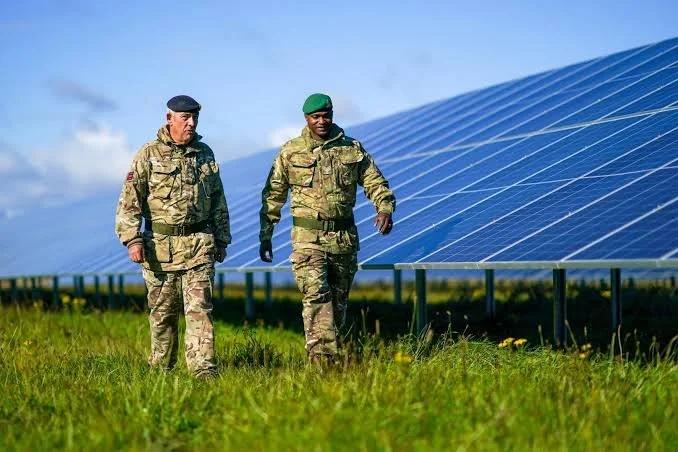
NATO transitions to renewable energy
Friends,
As we navigate the complexities of our global landscape, it becomes increasingly clear that true leadership requires both looking outward at the challenges we face and inward at the massive footprint of our own institutions. Among those, the Department of Defense (DoD) stands out—not only as the largest employer in the United States, but also as one of the single largest institutional consumers of petroleum in the world. According to the Pentagon’s own data, the DoD accounts for over 77% of the U.S. government’s energy consumption, with operational energy—primarily jet fuel and diesel—making up the lion’s share.
Transforming this dependency is not just an environmental choice—it’s a strategic imperative. As the threats posed by climate change grow more acute, the Pentagon itself has repeatedly recognized climate change as a “threat multiplier,” one that exacerbates existing vulnerabilities and creates new security challenges. The 2022 National Defense Strategy directly ties climate action to operational readiness, resilience, and mission success, underscoring that our adversaries are not waiting for us to adapt—they are already moving forward.
Under my Green Marshall Plan, the Pentagon will transition to one hundred percent renewable energy. This commitment is grounded in the urgent need to cut carbon emissions, but it is also rooted in pragmatism: every gallon of fuel delivered to a forward base comes at enormous cost, both in dollars and in lives. A 2021 RAND Corporation study, using Pentagon data, found that fuel convoys have been among the most targeted operations in recent conflicts, leading to significant casualties and operational vulnerabilities. By shifting to renewables, we reduce these risks and fortify our troops.
We can celebrate the progress that has already been made. On military bases, about forty-five percent of the electricity now comes from renewable sources like solar and wind—a testament to what can be achieved when we prioritize sustainability. In fact, the Department of Defense has invested over $1.6 billion in renewable energy projects since 2011, according to a 2023 Pentagon report. From solar arrays at Fort Hood in Texas to microgrids at Marine Corps Air Station Miramar in California, the military is already proving that clean energy enhances operational resilience. Bases with independent renewable microgrids are better able to withstand cyberattacks and natural disasters that might otherwise cripple power supplies.
However, a significant challenge remains: operational energy. While progress on fixed installations is impressive, the fuel needed for ships, aircraft, and tactical vehicles still overwhelmingly comes from fossil sources. The Pentagon’s own 2023 Climate Adaptation Plan acknowledged that operational energy is the “hardest nut to crack.” Yet, hope is on the horizon. The Navy has begun testing biofuels for its Great Green Fleet initiative, and the Air Force is experimenting with synthetic fuels and electrified ground vehicles. These are the seeds of transformation—and with the right investment and leadership, they can grow into a comprehensive shift.
The path forward must be a complete transition. Reaching one hundred percent renewable energy across all Department of Defense infrastructure and operations will reduce costs, increase energy security, and position our military as a leader in the global green economy. According to a 2023 Congressional Research Service report, the DoD’s annual energy bill exceeds $14 billion; transitioning to renewables and efficiency could save billions over the next decade. More importantly, it will save lives by reducing the need for dangerous fuel convoys and by making bases less vulnerable to disruptions.
This is not just about environmental stewardship—it is about national security, operational effectiveness, and building a resilient future for our nation. The Pentagon’s own leadership, from former Secretary of Defense James Mattis to current brass, have called for a break from fossil fuel dependency. If we want to win the battles of tomorrow, we must embrace the energy transition today.
In solidarity,
Gamy Enriquez, MPA