From Escalation to Engagement: Charting a Safer Path with Iran
Friends,
I came of age in the shadow of September 11th, a moment that fundamentally reshaped America’s sense of security and its understanding of the world. That formative period sparked my lifelong interest in international affairs and led me to write a 64-page senior thesis on Iran’s foreign policy as an undergraduate. For the past quarter century, I have closely followed Iran’s trajectory—its society, politics, and evolving role on the world stage—with deep concern. This long view has shaped both my analysis and my sense of urgency as the stakes continue to rise.
A year ago, on June 18, 2025, when speculation arose that President Trump might attack Iran in 2025, I publicly warned that such a confrontation would not be confined to the Middle East. Drawing on years of study, I argued that Iran possesses global capabilities—military, cyber, and diplomatic—that could fundamentally alter the shape of any conflict. My YouTube video at the time outlined these risks, and recent developments have only confirmed those predictions. Iran’s ability to strike U.S. and allied interests far beyond its immediate neighborhood is now a reality we must reckon with.
Understanding Escalating Tensions Between Iran and the West
Recent geopolitical developments highlight an intensifying, high-stakes standoff between Iran and the United States, marked by explicit threats to broaden the theater of conflict. As of August 2026, diplomacy remains stalled, with hardline figures gaining influence in Tehran and rhetoric reaching new heights.
The Strategic Shift Toward Global Targets
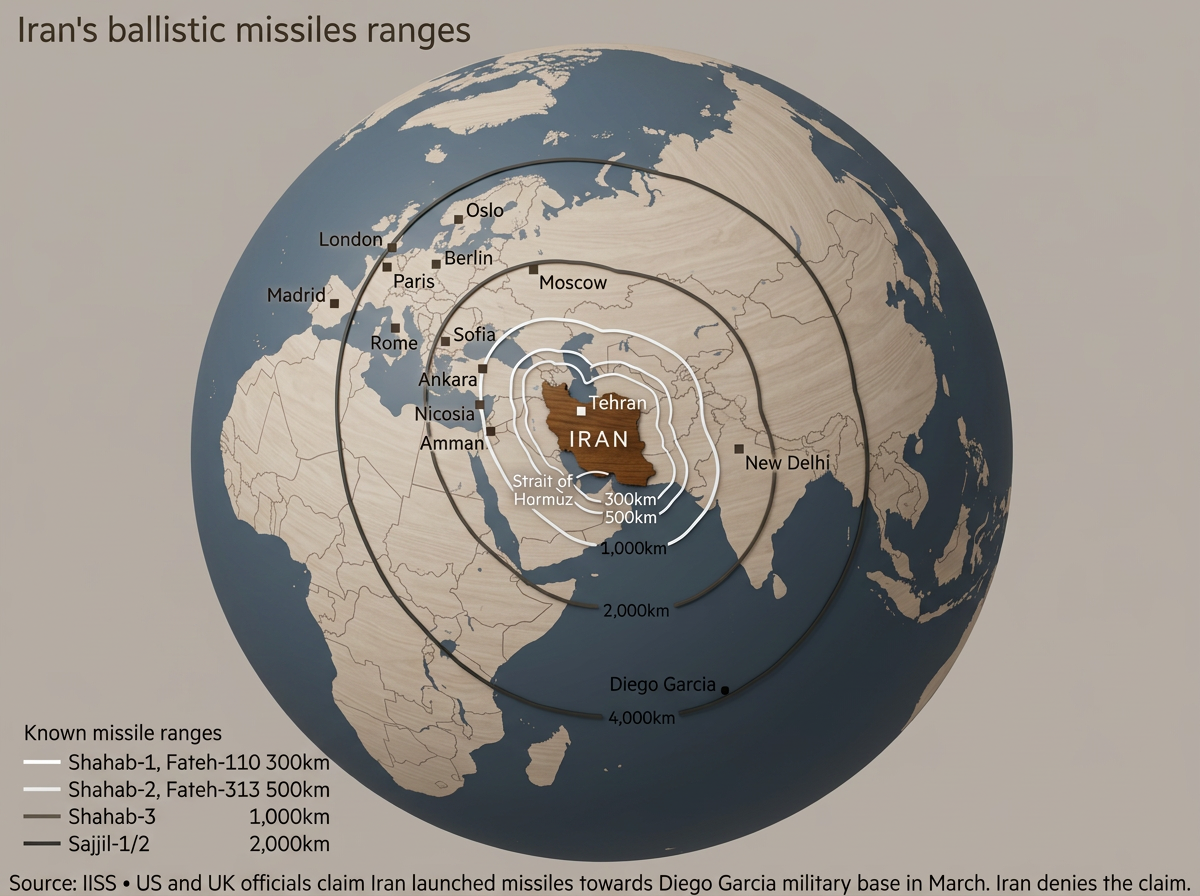
At the core of the current tension is Iran’s evolving military strategy. Rather than limiting potential conflict to the Middle East, Iranian leaders have signaled a willingness to strike targets farther afield—including US military bases in Europe—if they perceive a direct threat to their own infrastructure.
Direct Deterrence
Iran has explicitly warned that any foreign base facilitating attacks on its territory will be treated as a legitimate military target.
Diversified Tactics
Beyond ballistic missile threats, Tehran has reportedly explored non-traditional forms of escalation, such as sabotaging subsea fiber-optic cables to disrupt communications in the Strait of Hormuz.
Demonstrated Capabilities: Despite technical limitations regarding accuracy and payload at extreme ranges, recent incidents—such as attempts to strike distant bases in the Indian Ocean—demonstrate a clear intent to project power globally.
Diplomatic Stagnation and Hardline Influence
The failure of interim agreements and the collapse of diplomatic channels have created a vacuum now filled by military posturing. The recent appointment of hardliners to key security positions suggests Tehran is prioritizing "defiant strength" over compromise.
Escalation Logic
Many within the Iranian regime argue that the US cannot be trusted to honor agreements, leading to a "tit-for-tat" cycle where each side attempts to inflict greater costs on the other.
Proxy Reliance
Analysts suggest that while Iran seeks to project global reach, they may continue to rely on regional proxies—such as groups in Lebanon, Iraq, and Yemen—to maintain operational pressure without risking a direct, full-scale military defeat.
Internal Uncertainty
While the regime projects a united, aggressive front, some observers note an internal risk that Tehran may be overplaying its hand, potentially inviting a more severe response from Washington than it is prepared to absorb.
Summary
In essence, the situation is defined by a breakdown in diplomacy and a mutual adoption of increasingly aggressive strategies. With Iran moving toward internationalized conflict and the U.S. expressing frustration over the stalemate, the risk of miscalculation remains high. Both sides are engaged in a high-stakes test of resolve, shifting from seeking a lasting settlement to proving their willingness to endure escalating conflict.
This is precisely why I decided to run for Congress in 2026 on a Green Marshall Plan, which will fund a national Universal Basic Income, and why I am running again in 2028. My campaign is rooted in the conviction that the United States must recommit to diplomacy, international institutions, and the rule of international law—not just because it is prudent, but because it is right. The world operates according to rules, and when we ignore them, the consequences are severe. Americans make up just 5% of the world’s population, yet we consume 25% of its resources and maintain more than 800 military bases globally. Thirteen of those bases in the Middle East have already been destroyed by Iranian actions, and now we face the sobering prospect of Iran targeting facilities in Europe. The global order is shifting, and unless we adapt—by upholding the rules of international relations—we risk a future defined by endless escalation and instability.
Yet, there is reason for hope. History shows that diplomacy, dialogue, and principled leadership can change even the most challenging trajectories. By returning to the table with integrity and a renewed commitment to global cooperation, we can build a safer, more stable, and more just world for generations to come.
In Solidarity,
Gamy Enriquez, MPA