Friends,
Analyzing the arguments surrounding the Israel lobby’s influence on American foreign policy reveals a complex, high-stakes dynamic. In a recent candid breakdown, the discussion centers on how organizations like AIPAC operate within the U.S. political system, the specific goals they pursue, and the profound, often unintended consequences for Israel itself.
The Mechanics of Influence
The explanation of how this network functions offers a pragmatic yet sobering look at Washington politics. Rather than operating as a shadowy conspiracy, the lobby—with AIPAC as its most prominent anchor—functions as a loose but highly effective network dedicated to securing unconditional American support.
It is crucial to understand that this is simply the standard machinery of American democracy at work. Lobbying, strategic political spending, and electoral pressure are legal, everyday tools utilized by groups ranging from the NRA to the AFL-CIO. What sets the Israel lobby apart is not its methods, but its unmatched success. Powered by dedicated, highly capable strategists, the network effectively ensures that even when American and Israeli interests diverge, U.S. policy continues to prioritize Israel.
The "Greatest Enemy" Paradox
Perhaps the most provocative insight from this analysis is the argument that while the lobby intends to support Israel, it may ultimately be functioning as its greatest enemy. Historical evidence points to the two-state solution as having long been the only viable path to peace and the preservation of a secure, democratic Jewish state.
Demographics tell the story within "Greater Israel," where roughly 7.3 million Israeli Jews and 7.3 million Palestinians reside. Facing this reality, the state is left with a stark set of choices:
A Single Democratic State: Granting equal rights to all would effectively end the original Zionist vision of a explicitly Jewish state.
A Two-State Solution: Long considered the best option, effective implementation was consistently stalled by lobby pressure that prevented U.S. presidents from applying meaningful leverage.
Apartheid: Citing reports from Human Rights Watch, Amnesty International, and the Israeli group B’Tselem, the analysis leads to the sobering conclusion that Israel has effectively transitioned into an apartheid state.
Ethnic Cleansing: Current military actions in Gaza reflect an attempt to drive out the Palestinian population—a desperate endgame for a nation trapped in an unsustainable status quo.
Looking Ahead
The historical context remains striking. Every U.S. president from Jimmy Carter through Barack Obama recognized that a two-state solution was in Israel’s own best interest, yet lobby pressure repeatedly prevented Washington from enforcing that policy.
Caught between demographic reality and security challenges, Israel now finds itself navigating a grim path between permanent structural inequality and displacement. Skepticism is warranted as to whether these measures can ever deliver true long-term security. A decade ago, terms like "apartheid" were rare in mainstream foreign policy discourse; today, they dominate it. By narrowing political imagination and obstructing viable alternatives, the lobby's influence has steered both the U.S.–Israel relationship and the broader region toward compounding instability.
Looking past conventional wisdom requires confronting how special-interest dynamics shape national destinies. Ultimately, true representation means ensuring American policies reflect fairness, accountability, and justice both at home and abroad. Just as our economic system must serve every citizen and demand that corporations pay their fair share, our foreign policy must represent all communities equitably.
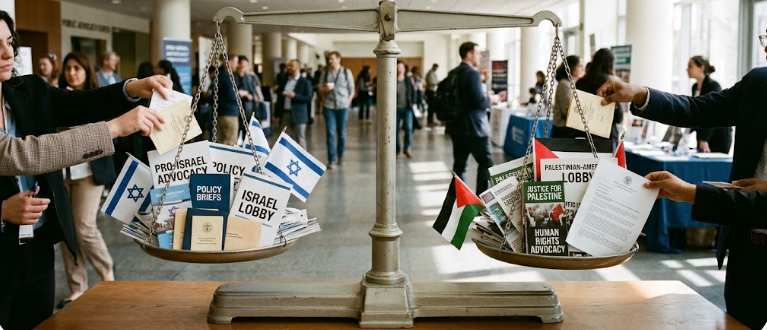
Building an organized, vocal counterweight—such as a robust Palestinian-American lobby—is an essential step toward balancing the debate in Washington. Establishing that counterbalance offers the best path toward a foreign policy anchored in equal human rights, international law, and global justice.
In Solidarity,
Gamy Enriquez, MPA
2028 Congressional Candidate
Nevada’s Second Congressional District