Dismantling Old Orders: Toward a Truly Progressive Future
“You want to know what this was really all about? The Nixon campaign in 1968, and the Nixon White House after that, had two enemies: the antiwar left and black people... by getting the public to associate the hippies with marijuana and blacks with heroin, and then criminalizing both heavily, we could disrupt those communities... Did we know we were lying about the drugs? Of course we did.”
Friends,
I ran for Congress on ending the fabricated war on drugs and transitioning to a system that regulates, taxes, decriminalizes, and offers amnesty—transforming a failed policy into a source of revenue for Universal Basic Income (UBI). Nevada can lead the way, as we have turned all major vices into legal commodities in the Entertainment Capital of the World. We can look to European models, such as Holland and Portugal, for inspiration. The so-called war on drugs has long served as a pretext to subjugate certain groups domestically and to dominate geostrategically.
U.S. Military Expansion in the Western Hemisphere
The Trump administration is escalating a series of military campaigns across Latin America under the banner of regional security and counter-cartel operations. Recent testimonies from Pentagon officials suggest that the actions taken against criminal organizations in Ecuador and the broader Caribbean are merely the initial phases of a much larger, multi-national strategy.
Key Developments in Regional Strategy
The military approach, characterized by officials as "deterrence-focused," involves a mix of direct U.S. involvement and the provisioning of advanced capabilities to partner nations. This shift reflects a broader geopolitical doctrine that prioritizes unilateral and bilateral kinetic actions over traditional diplomatic efforts.
• Operation Total Extermination: This joint U.S.-Ecuadorian offensive is intended to target transnational criminal organizations. Its reach has already extended across borders, resulting in unintended strikes on civilian infrastructure in neighboring Colombia.
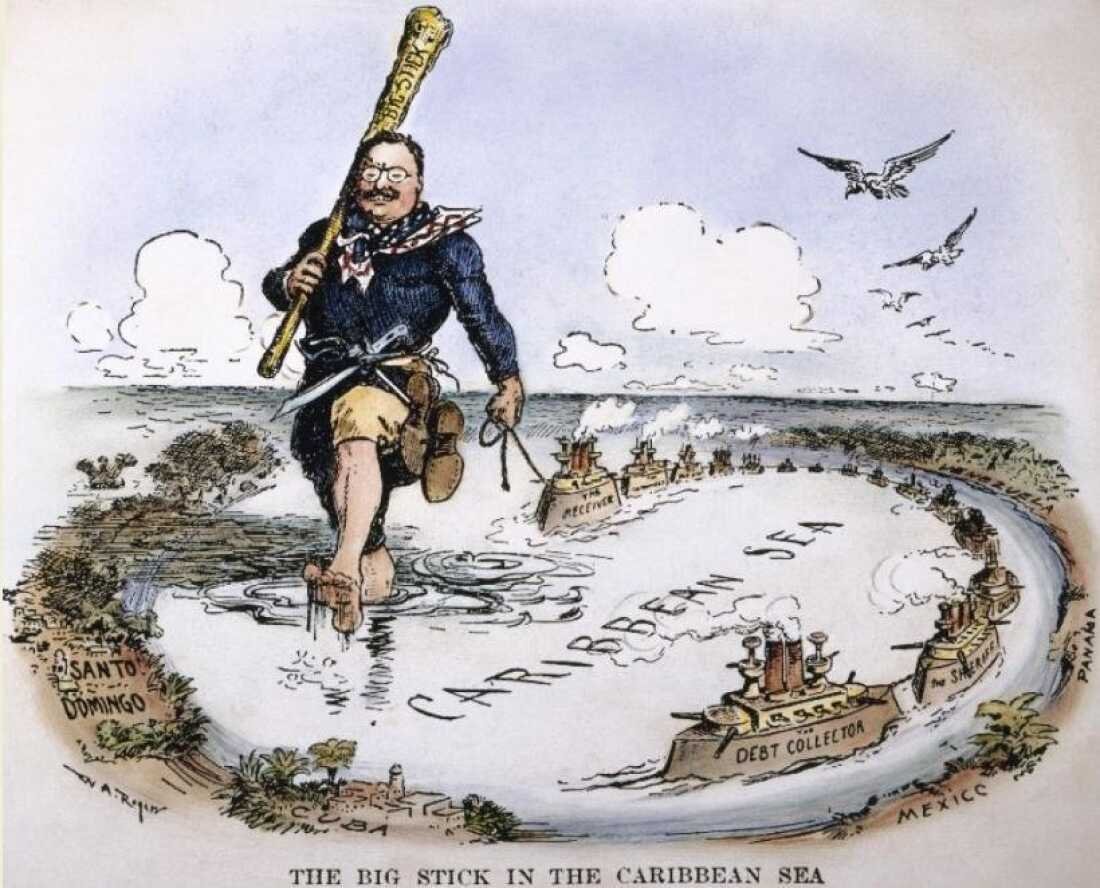
• The "Trump Corollary": Acting as an aggressive interpretation of the historic Monroe Doctrine, this framework asserts a U.S. mandate to intervene militarily and politically throughout the Western Hemisphere, from the Arctic to the Panama Canal.
• Broadened Scope: Pentagon officials have signaled that "terrestrial strikes" against cartels and "narco-terrorists" are expected to increase across nearly 20 nations in the region, effectively establishing a wide-ranging, perpetual military footprint.
Political and Diplomatic Implications
The administration's actions are increasingly intertwined with aggressive regime-change efforts, particularly concerning Cuba and Venezuela. The use of economic blockades, such as the fuel embargo on Cuba, and the threat of legal indictments against foreign leaders are being utilized to force regional compliance with U.S. interests.
• Diplomatic Pressure: Through the "Americas Counter Cartel Coalition," the U.S. has secured agreements with 17 partner nations, though critics remain concerned about the lack of transparent legal frameworks governing these strikes and potential violations of national sovereignty.
• Concerns Over Oversight: Legal experts and lawmakers have raised alarms regarding the lack of defined "end points" for these conflicts. There is growing fear that the executive branch is bypassing constitutional mandates, opting for "war by whim" rather than adhering to established international law or Congressional oversight.
In summary, the administration is implementing a sweeping military-centric policy that significantly elevates the risk of regional destabilization. By framing these interventions as essential to national security and border integrity, the U.S. government is effectively transitioning toward a policy of sustained, indefinite military engagement across the Americas.
As we look to the future, it is vital that we return to the core values of rule of law, constitutional governance, diplomacy, and a truly progressive international order. The so-called liberal international order under Trump has been neither fully liberal, international, nor orderly—and it is time for change. I am running again in 2028 to fight for these principles and to help create a fairer, more just society. Join the movement—subscribe, share, and get involved in shaping a better world. Our work does not wait for the end of the Trump era; it begins today. Together, we can build hope and progress for all.
Gamy Enriquez, MPA
References
- "Trump’s ‘Operation Total Extermination’ Expands to Ecuador, Colombia, and Cuba." The Intercept, March 23, 2026. https://theintercept.com/2026/03/23/trump-operation-total-extermination-ecuador-colombia-cuba/
- "Decriminalising Drugs in Portugal: A Model for Europe?" EMCDDA, June 2011. https://www.emcdda.europa.eu/publications/drugs-in-focus/decriminalisation-drugs-portugal-model-europe_en
- "Dutch Drug Policy: A Model for the World?" Transform Drug Policy Foundation, 2020. https://transformdrugs.org/publications/dutch-drug-policy-a-model-for-the-world
- "The Monroe Doctrine, 1823." U.S. Department of State, Office of the Historian. https://history.state.gov/milestones/1801-1829/monroe
- "The Liberal International Order: The End of an Era?" Council on Foreign Relations, April 29, 2019. https://www.cfr.org/backgrounder/liberal-international-order-end-era
- "Universal Basic Income: Frequently Asked Questions." Economic Security Project, 2024. https://economicsecurityproject.org/ubi-faq/