From NAFTA to Trade Wars: How Free Trade Policies Destroyed My Family’s Business and Hurt North America’s Working Class
Friends,
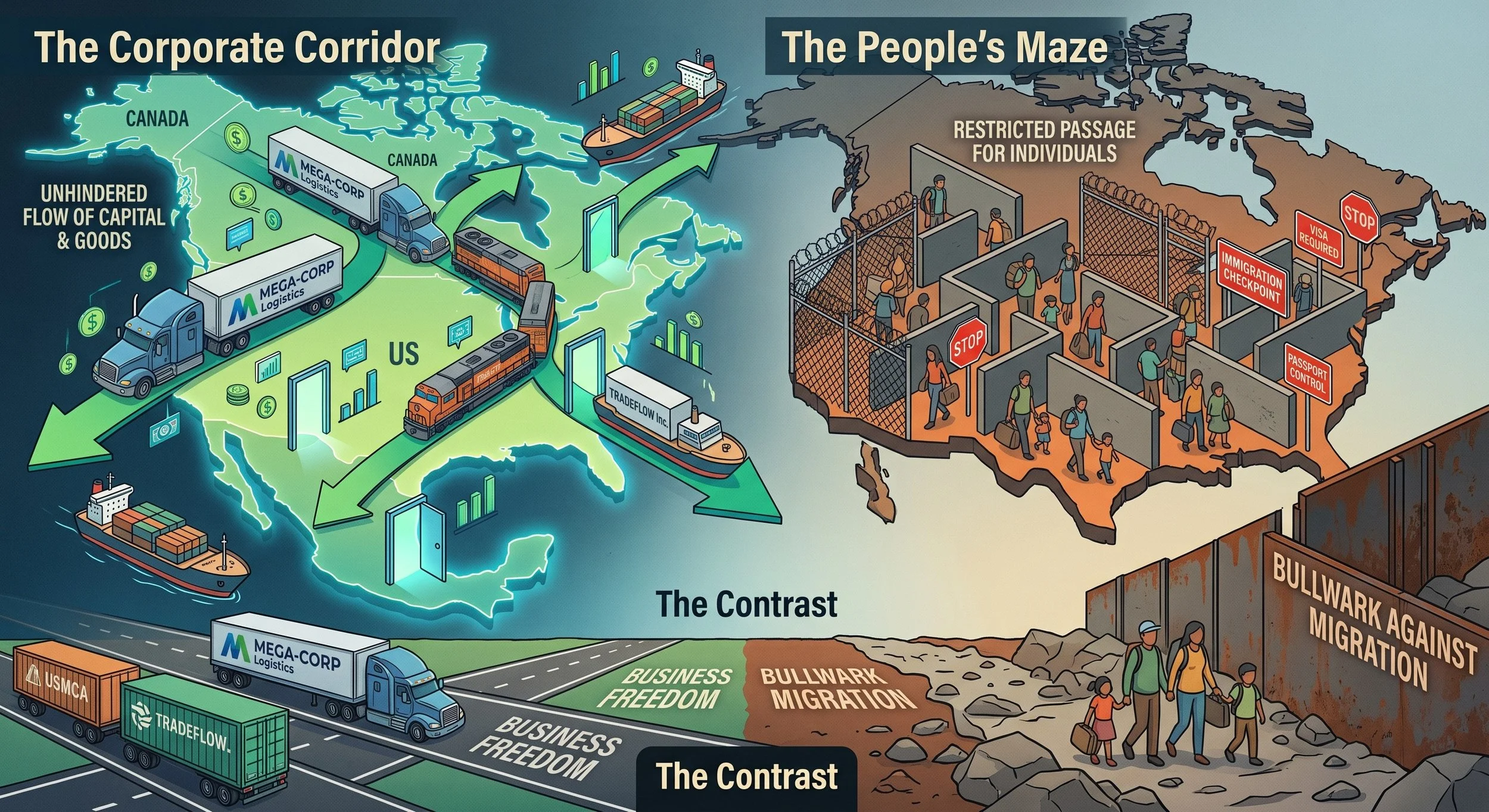
As a candidate for Congress in 2028, my campaign is fundamentally shaped by the failures of the neoliberal order—a system whose last nail is currently being hammered in by the second Trump administration’s reckless trade wars. My perspective is not merely theoretical. My family’s business was destroyed in the late 1990s as a result of NAFTA, a fate shared by countless families across the American Midwest, South, and beyond. But it wasn’t just Americans who suffered: working families in Mexico and Canada also lost out, while multinational corporations and the wealthiest 1% made out like bandits.
We are now living with the consequences. The global trade architecture, established in the 1990s, has fostered inequality, insecurity, and left our supply chains dangerously fragile. The so-called “free market” was in reality a rigged system, prioritizing corporate interests and permitting countries like China to undermine industries worldwide through persistent, destabilizing trade surpluses.
The second Trump administration’s chaotic trade wars only deepened the crisis, exposing just how broken the system has become. My experience—and the stories of millions of other Americans—make it clear: the time has come for a new trade paradigm.
If elected to Congress, I will champion a post-neoliberal trade agenda centered on these priorities:
Balanced Trade: Establish rules that require trade balance among nations, using tariffs or capital controls where necessary to counter destabilizing surpluses and protect American jobs.
Floor of Standards: Set enforceable, non-negotiable baselines for labor rights, environmental protection, and antimonopoly safeguards to ensure workers and communities are not sacrificed for corporate gain.
Regulatory Autonomy: Restore the right of nations to enact domestic policies for data privacy, AI oversight, and industrial development, ending the “one-size-fits-all” straitjacket imposed by past agreements.
Strategic Flexibility: Build a flexible customs union model, enabling countries to pursue shared goals while retaining sovereignty to strengthen their own economies and communities.
We must learn from three decades of failure. A new international framework—one that rewards fair competition and fortifies our democracy—can deliver economic stability and empower us to meet the great challenges of the twenty-first century. I am committed to making this vision a reality for all Americans.
In Solidarity,
Gamy Enriquez, MPA