The Rise of the "Remigration" Movement
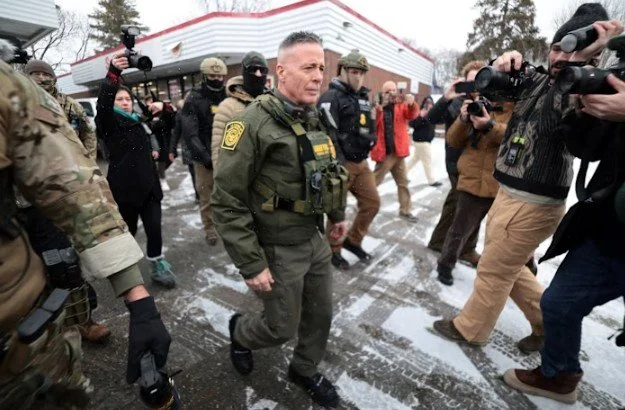
Greg Bovino says remigration is the defining political issue of our time
“ Don’t assume history is on democracy’s side. Past reactionaries failed not because of any iron law of history, but because they met determined opposition from democracy’s champions. Complacency, not authoritarian strength, is the real danger.”
Friends,
The concept of "remigration"—a radical project aimed at removing immigrants and even naturalized citizens to restore cultural homogeneity—has transitioned from a fringe extremist idea to a central pillar of transatlantic right-wing politics. Through a combination of strategic social media usage and the normalization of the term by high-level American political figures, this ethnonationalist agenda is gaining significant momentum across Europe.
The Role of US Influence and Normalization
The movement’s recent success is largely attributed to the symbiotic relationship between American "Maga" influencers and European activists. By adopting the rhetoric of influential U.S. political figures and utilizing platforms like X, proponents have successfully pushed the boundaries of acceptable political discourse.
American Normalization: Figures within the U.S. political establishment have adopted the term "remigration," effectively mainstreaming a concept that was previously considered too toxic for public debate in Europe.
Transatlantic Networks: U.S. social media platforms and think-tank partnerships have enabled European activists to professionalize their operations, moving away from fragmented, localized efforts toward a cohesive, transnational movement.
Strategic Campaigning: Activists now utilize advanced digital tools and political lobbying strategies—modeled after powerful interest groups—to influence legislation and pressure European governments.
Challenges and Future Outlook
While the movement is gaining traction in various national parliaments, its path forward faces substantial domestic and political hurdles. The rise of remigration has triggered large-scale counter-protests and internal divisions within traditional far-right parties, as some leaders fear that such radical rhetoric could alienate moderate voters.
Internal Friction: Major European political entities remain cautious, with some parties distancing themselves from the most extreme elements of the movement to maintain electoral viability.
"Metapolitical" Focus: Proponents like Martin Sellner prioritize shifting the cultural conversation over immediate electoral wins, believing that changing the language of the debate is the first step toward permanent policy shifts.
Institutionalization: With the formation of new think-tanks and advocacy groups, the movement is attempting to secure a permanent seat at the table of European governance.
Ultimately, the alliance between American influence and European far-right activists has fundamentally altered the political landscape. By leveraging globalized communication channels and the prestige of U.S.-based support, the remigration movement has successfully accelerated its agenda, signaling a volatile shift in how immigration and national identity are being debated on the continent.
Why I Believe in Democracy’s Quiet Power
I believe democracy’s greatest strength lies in what reactionary thinkers often dismiss as its weakness: its protection of ordinary, private life. Most people do not live for politics; most people engage in politics so that they can live the life they choose to live in peace and freedom. Democracy works because it does not demand that I—or any citizen—make politics the center of existence. It only asks that I speak up when something I care about is threatened. To me, that is its genius: it secures both private freedom and public voice, and that combination is what breeds true social strength.
Reactionary politics, by contrast, tend to be unstable. A movement built on passion, spectacle, and the hunt for enemies inevitably collides with the routines of everyday life that most people value, and when it does, ordinary citizens push back. The most durable modern reactionary, Viktor Orbán, understood this: rather than politicizing everything, he built his competitive authoritarian system quietly and bureaucratically, keeping repression as invisible as possible so as not to provoke a backlash from people who would rather not think about politics at all. Passion-driven authoritarianism, by comparison, tends to be fleeting, because its proponents overestimate how sustainable and widely shared its energies really are.
Historical examples reinforce the point. Nietzsche admired Tsarist Russia as Europe's one holdout against democracy and predicted a great Russian future, yet the regime collapsed after humiliating military failures. American observers like Richard Washburn Child, disillusioned with democracy in the 1920s, celebrated Mussolini's fascism as spiritually vital and more efficient, only to be embarrassed by history: Italian fascism proved incompetent, while American democracy went on to dominate the century. The recurring error is overestimating authoritarian strength and underestimating democratic resilience.
On how to defeat reactionary forces, the essay's argument points in a few concrete directions:
Recognize where democracy's real power comes from. It rests on each person's desire for a good life, which is more permanent than the friend/enemy distinction reactionaries mobilize. Defenders should protect the "contemptible comforts" of ordinary life rather than apologize for them, because those comforts are what most people will fight to keep.
Don't assume history is on democracy's side. Past reactionaries failed not because of any iron law of history, but because they met determined opposition from democracy's champions. Complacency, not authoritarian strength, is the real danger.
See through the disguise. Today's reactionaries present themselves as democrats precisely to avoid provoking the kind of mass resistance earlier authoritarians did. Naming the threat clearly is the first step to mobilizing against it.
Match the other side's commitment. The contest ultimately turns on whether democracy's supporters are as committed to equality as its rivals are to hierarchy. Democracy's supporters are numerous enough to be unstoppable if they wake up in sufficient numbers, but that awakening is not automatic.
Predictions of democracy's imminent doom have been wrong for two hundred years, and the fires of reaction could well dwindle to embers, but only if enough people choose to defend the ordinary freedoms that make democratic life worth living.
In Solidarity,
Gamy Enriquez, MPA