A Smarter Way to Fight Mexico's Cartels: A Personal Perspective
“The Nixon campaign in 1968, and the Nixon White House after that, had two enemies: the antiwar left and black people. You understand what I’m saying? We knew we couldn’t make it illegal to be either against the war or black, but by getting the public to associate the hippies with marijuana and blacks with heroin, and then criminalizing both heavily, we could disrupt those communities. We could arrest their leaders, raid their homes, break up their meetings, and vilify them night after night on the evening news. Did we know we were lying about the drugs? Of course we did.”
Friends,
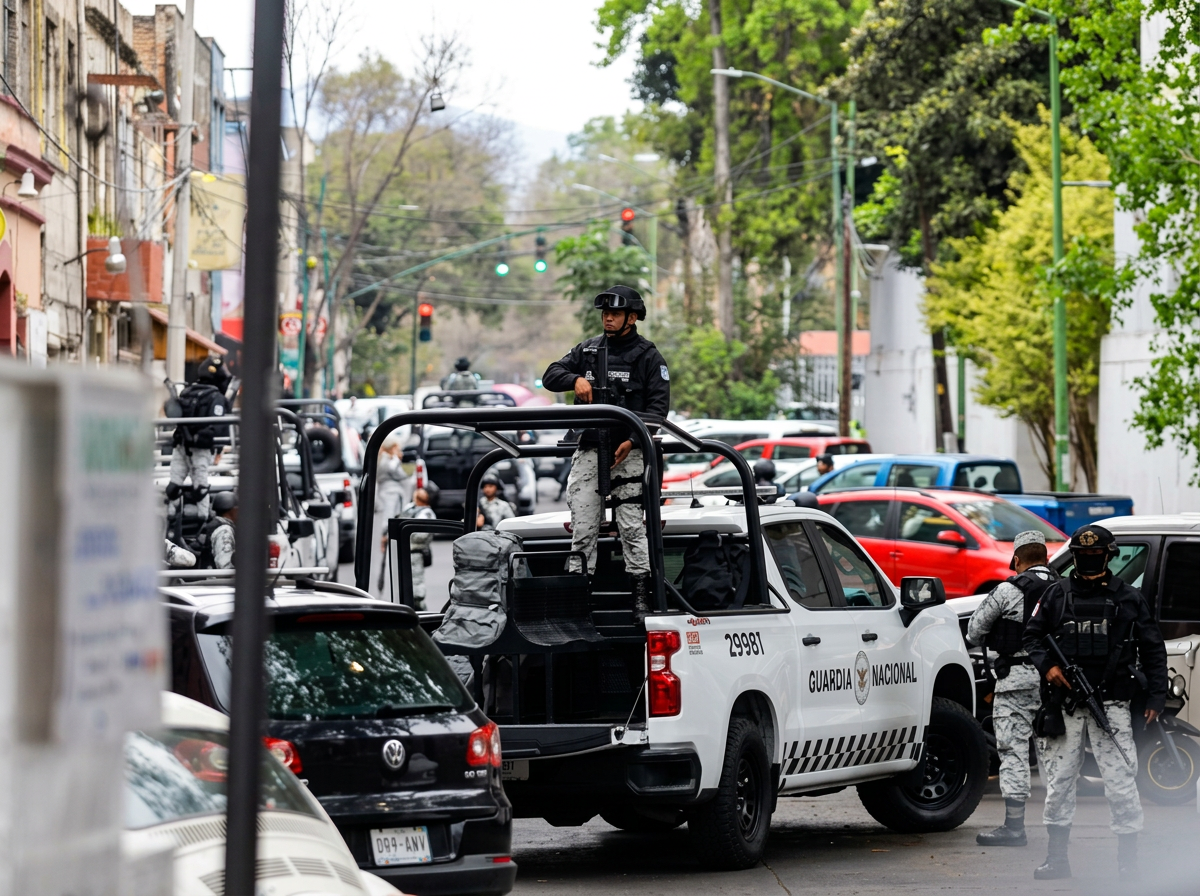
Tensions between the US and Mexico over security are approaching unprecedented levels, fueled in part by President Trump's repeated threats to unilaterally strike Mexican drug cartels, which he claims effectively "run" the country. The recent killing of Cartel Jalisco Nueva Generación (CJNG) leader "El Mencho" by the Mexican National Guard, with US military intelligence support, illustrates both the reach of cartel terror and the absence of easy answers.
The Track Record So Far
Between 2008 and 2024, Congress appropriated roughly $3.6 billion in security assistance to Mexico, and the Trump administration has designated six Mexican cartels as foreign terrorist organizations. These measures have done little to curb US demand for illicit narcotics or stem the "iron river" of American weapons flowing south. Meanwhile, Mexican President Claudia Sheinbaum has walked a difficult line: deploying 10,000 additional troops to the border, transferring nearly 100 high-level drug criminals to US custody, and allowing expanded CIA drone flights, while still refusing to permit unilateral US strikes or American boots on the ground.
The Dangers of Over-Militarization
Decades of security cooperation, from the Mérida Initiative to today's US-Mexico Security Implementation Group, have failed to build durable institutional capacity in Mexico. The "train-and-equip" model actually contributed to cartel expansion. The "kingpin strategy" of eliminating or extraditing top leaders has repeatedly fractured cartels into more violent, harder-to-track successor groups. Bombing labs, eradicating precursor crops, or striking go-fast boats tends to raise risk premiums, spur competition, diversify cartel revenue streams, and push production and trafficking routes elsewhere, while eroding intelligence sharing with allies. The FY26 National Defense Authorization Act, notably, explicitly forbids the use of military force against Mexico.
A Three-Part Restraint-Oriented Alternative
I recommend three pillars:
Better security cooperation: We should expand DOD advise-and-assist, education, and professional training programs, and explore a US advisory role inside Mexican command centers rather than direct action.
Attacking the enablers: We need tougher US laws against arms smuggling, deeper judicial and financial cooperation to disrupt money laundering, and joint cross-border investigations into corrupt officials on both sides.
Tackling demand and supply chains: We must fund overdose-prevention and demand-reduction programs, strengthen Treasury's Counter-Fentanyl Strike Force, and pursue commercial diplomacy with Mexico and China to constrain precursor chemicals.
The bottom line is that supply-side militarization without demand-side investment is a treadmill: cartels adapt, violence disperses, and Americans keep dying.
Conclusion: Why I Ran in 2026 and Why I'm Running Again in 2028
This is exactly why I ran for Congress in 2026, and why I am running again in 2028. The evidence is clear: the war on drugs is a fabricated war that fills prisons, empowers cartels, and does nothing for the sick. I am running to end it. That means amnesty for nonviolent drug offenders, ending mass incarceration, and treating drugs not as a criminal question but as a health question. We have to connect the dots. If we had universal healthcare, the demand that funds the cartels would fall, because addiction would meet a doctor instead of a dealer.
Nevada can lead the country here. We already turned sex work, alcohol, and gaming into regulated commodities that power our economy and make us the entertainment capital of the world. It is only logical that other vices follow. Legalize, tax, and regulate them so people can consume safely at a licensed location, as ordinary as a Starbucks or a dispensary on the corner. The revenue rebuilds our social safety net and funds a universal basic income, so no American is one bad month away from ruin. That is a smarter, more humane fight, and it starts at home.
In Solidarity,
Gamy Enriquez, MPA
References
- Congressional appropriations data, 2008–2024
- US National Defense Authorization Act, FY26
- Mexican government homicide statistics
- US Treasury Counter-Fentanyl Strike Force information
- Major news and government reports on US-Mexico security cooperation