The Tyranny Comes Home: Reclaiming Liberty on America’s 250th Anniversary (orginally published 01/03/2026)
Freinds,
Thucydides, the Greek historian and general, identified a pattern 2,400 years ago: Athens’ leaders admitted their empire was a tyranny. Pericles said, “Your empire is now like a tyranny,” while Cleon bluntly told the Assembly their rule was “tyranny imposed upon unwilling subjects who plot against you.” Thucydides’ insight—that tyranny imposed abroad is eventually turned inward—remains true: nations that control others through coercion and violence eventually use those tools on themselves.
This is what has happened in America. The tools we used abroad—mass surveillance, indefinite detention, torture, extrajudicial killing, suspension of due process—have returned home. The American Civil Liberties Union has documented that the National Security Agency has been monitoring Americans' communications without constitutional authority. The Brennan Center for Justice has reported that in Congress, officials have warned that legal theories from Guantanamo may now diminish habeas corpus for citizens, raising concerns that practices once kept abroad are encroaching on civil liberties at home.
The Tyranny Comes Home: Reclaiming Liberty on America’s 250th Anniversary
As July 4, 2026, approaches, America faces a crossroads. We will mark 250 years since the Declaration of Independence—a quarter-millennium since our founders proclaimed equality and unalienable rights. This same year will also be the 25th anniversary of September 11, 2001, a day that fundamentally changed our national consciousness and challenged those founding principles.
The choice before us is clear: will we renew our revolutionary commitment to liberty, or continue down the path of security-state expansion? As a potential candidate for Nevada’s Second Congressional District, I see this not as a historical debate, but as the defining challenge for progressive leadership.
The Long Arc of Liberty
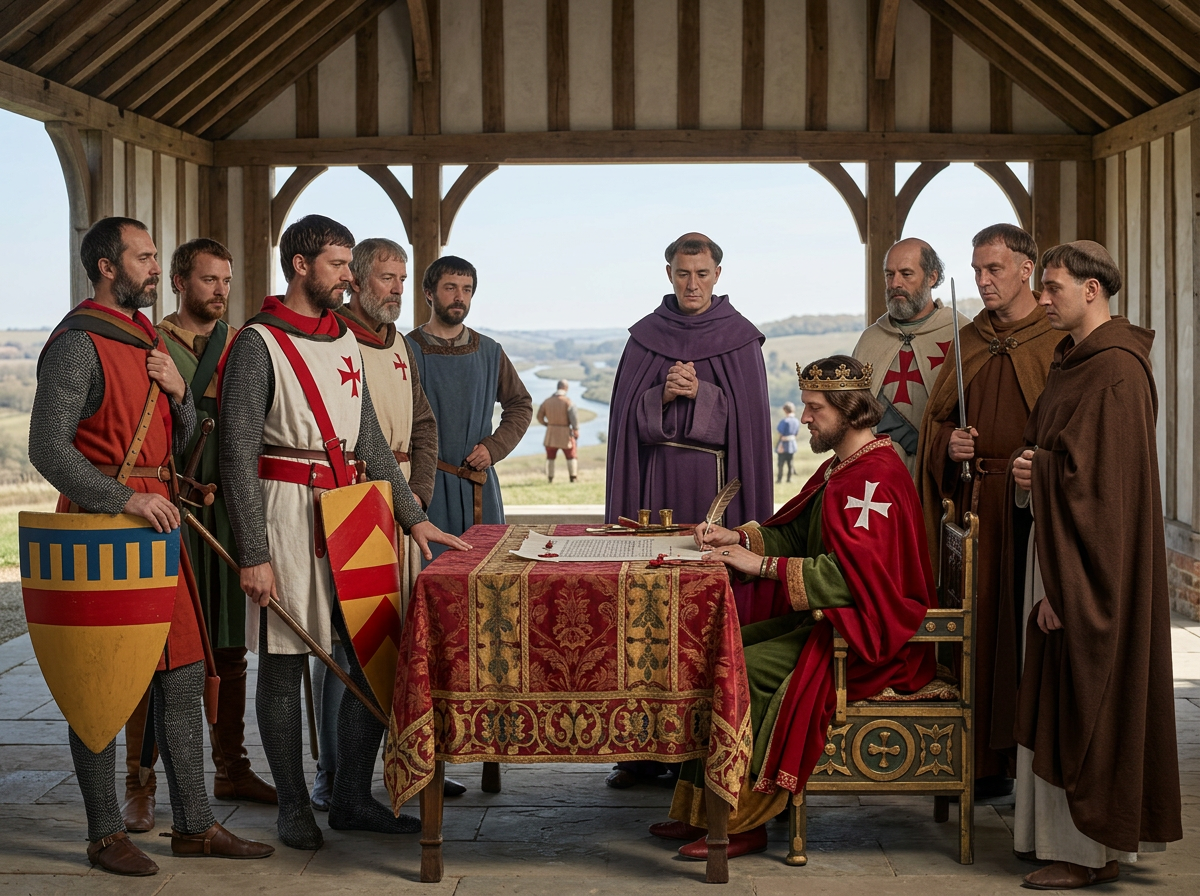
To understand what’s at stake, we must look before 1776. The Magna Carta of 1215 first established that rulers are bound by law, a principle that became a foundation of Anglo-American liberty.
This principle crossed the Atlantic, where colonists saw themselves as inheritors of English rights. When Parliament violated those rights, the colonists expanded the idea of freedom. The Declaration of Independence transformed protections for some into universal rights.
We must also face America’s founding contradiction. As the 1619 Project notes, slavery was central to our early development. The same founders who wrote “all men are created equal” owned slaves, and the Constitution denied enslaved people full rights.
This injustice shaped our history: the Civil War, Reconstruction, Jim Crow, and civil rights. The 1619 Project reminds us that at every turn, Black Americans have driven the nation closer to its ideals.
Understanding this history is essential because it reveals a pattern: America’s greatest progress has come when we’ve expanded liberty, and our darkest chapters have emerged when fear and prejudice led us to restrict it.
The Post-9/11 Betrayal
The attacks of September 11, 2001, killed nearly 3,000 people and traumatized our nation. In our grief and rage, we faced a choice about how to respond. We chose badly.
We were told we had to choose between liberty and security—that to be safe, we must surrender privacy, accept torture, embrace indefinite detention, and wage endless war. This was always a false choice. As political philosopher Michael Ignatieff argued in “The Lesser Evil,” when democracies abandon their core principles in the name of security, they undermine the very values they’re trying to protect and ultimately make themselves less safe and less free. The real strength of democracy lies not in its ability to become temporarily authoritarian, but in its capacity to remain democratic even under threat.
We ignored this wisdom. We passed the PATRIOT Act, creating a surveillance state that monitors Americans’ communications without warrants. We opened Guantanamo Bay, where human beings have been held for decades without trial. We invaded Iraq based on false pretenses, destabilizing an entire region. According to Airwars, the US has conducted at least 91,340 airstrikes over two decades during the War on Terror, many of which have taken place in countries where the US is not officially at war and have resulted in significant civilian casualties. Twenty-five years later, it is worth asking what these sacrifices have achieved. The wars in Afghanistan and Iraq cost over $8 trillion and hundreds of thousands of lives—and ended in failure. According to Jessica Katzenstein, the United States has seen a dramatic increase in mass surveillance since the 9/11 attacks. The Authorization for Use of Military Force, passed three days after 9/11, has been used to justify military action in at least 14 countries and on the high seas, according to a 2016 report from the Congressional Research Service.
The security-over-liberty framework is not just morally wrong—it’s strategically counterproductive. Torture doesn’t just violate human dignity; it produces unreliable intelligence and creates new enemies. Mass surveillance doesn’t just invade privacy; it chills free speech and political dissent. Perpetual war doesn’t eliminate terrorism; it creates the chaos and resentment that breeds it.
The “ticking time bomb” scenarios used to justify these measures are largely fantasies. The real choice isn’t between torture and catastrophe, or between surveillance and attack. The real choice is between maintaining our constitutional order with all its messy constraints, or sliding into an authoritarian security state that ultimately makes us less safe and less free.
A Progressive Vision for Nevada’s Second District
Now is the time to act. Nevada’s Second Congressional District needs leaders who will not only defend but actively reclaim our lost liberties. We must resist further erosions in the name of crisis and demand a government that puts freedom first.
Here’s what I would fight for in Congress:
End Perpetual War: Repeal the 2001 Authorization for Use of Military Force (AUMF). No more blank checks for endless military intervention. Every use of force should require explicit congressional authorization with clear objectives and time limits. We must redirect resources from failed military adventures to addressing real threats like climate change and pandemic preparedness.
Restore Civil Liberties: Reform the PATRIOT Act to require genuine warrants for surveillance of Americans. Close Guantanamo and try detainees in federal court or release them. End the drone program’s extrajudicial killings. Restore habeas corpus as an absolute right.
Confront Racial Justice: The security state has always fallen heaviest on communities of color. From stop-and-frisk to the militarization of police to the surveillance of Black Lives Matter activists, the post-9/11 security apparatus has been deployed against the very people fighting for the Declaration’s promise of equality. We need comprehensive police reform, an end to qualified immunity, and a truth and reconciliation process about slavery’s legacy.
Defend Democratic Institutions: The authoritarian impulse that justified torture and indefinite detention didn’t disappear—it morphed into attacks on voting rights, attempts to overturn elections, and the January 6 insurrection. We must pass the John Lewis Voting Rights Act, protect election officials, and hold accountable those who would destroy democracy to maintain power.
Address Real Security Threats: Climate change will displace hundreds of millions of people and destabilize nations. Pandemic disease can kill more Americans in a year than terrorism has in decades. Economic inequality threatens social cohesion. These are the actual threats to our security, and they can’t be solved with surveillance or bombs—they require investment in infrastructure, healthcare, education, and diplomacy.
The Choice Before Us
As we celebrate 250 years since the Declaration of Independence, we must ask ourselves: What are we celebrating? If it’s merely the fact of American power, then the post-9/11 path makes sense—accumulate as much security as possible, whatever the cost to liberty.
But if we’re celebrating the revolutionary idea that government derives its legitimacy from protecting individual rights—if we’re honoring the generations who fought to expand those rights to all people regardless of race, gender, or origin—then we must reject the false choice between freedom and safety.
The founders pledged their lives, fortunes, and sacred honor to the proposition that liberty is worth the risk. According to The National Archives, the American colonists viewed themselves as British and believed they were entitled to the same rights and liberties as other British citizens, but ultimately chose revolution rather than remain subjects of British rule. They chose to fight. The civil rights movement could have accepted segregation as the price of order. They chose resistance.
Every generation faces this choice. Ours came on September 11, 2001, and we failed the test. We let fear override principle. We traded liberty for the illusion of perfect security. We launched wars without end and built a surveillance state without limits.
But 2026 gives us a chance to choose again. On the 250th anniversary of our founding promise, we can recommit to the idea that liberty is not a luxury to be enjoyed in peacetime and discarded in crisis—it is the foundation of everything we are.
Democracies are strong not despite their commitment to liberty, but because of it. A nation that tortures is weaker than one that doesn’t. A government that spies on its citizens is more fragile than one that respects privacy. A country in perpetual war is less secure than one that pursues diplomacy and justice.
As someone considering running for Congress from Nevada’s Second District, I don’t promise perfect security—no honest person can. I promise something better: leadership that trusts you with freedom, that believes democracy is stronger than authoritarianism, that knows the best way to honor those who died on 9/11 is not to abandon our principles but to defend them.
The Declaration of Independence ends with a pledge of mutual support: “We mutually pledge to each other our Lives, our Fortunes and our sacred Honor.” Not our liberties. Not our principles. Those, the founders knew, were non-negotiable.
On July 4, 2026, as fireworks light up the Nevada sky, we should ask ourselves: Are we worthy of that pledge? Have we kept faith with those who risked everything for freedom? Or have we traded our birthright for the false promise of absolute security?
I know which choice I’ll make. I hope you’ll join me in choosing liberty—not because it’s easy or safe, but because it’s who we are. It’s who we’ve always been at our best. And it’s the only way forward worthy of the revolution we’re about to celebrate.
The founders gave us a republic—if we can keep it. Two hundred and fifty years later, that’s still our job. Let’s get to work.
Gamy Enriquez, MPA