Laid Off by Elon Musk: My Journey from Tesla to a Run for Congress
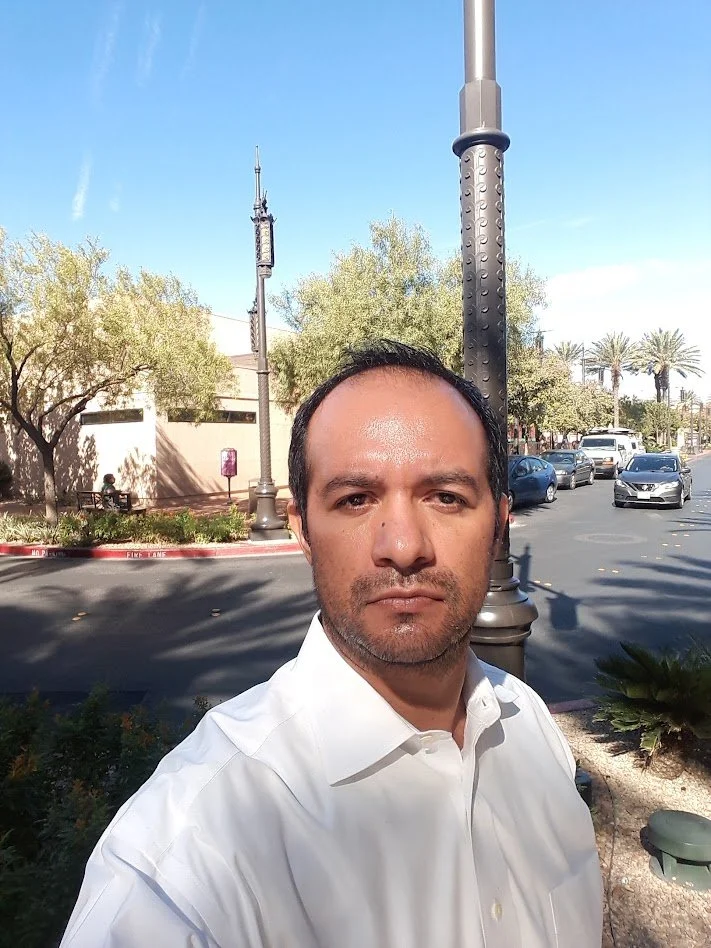
Out for lunch in Las Vegas during my time as a Tesla employee. Tesla HQ nearby 2018 circa.
While the world’s headlines buzz with the news of Elon Musk becoming the world’s first trillionaire, I can’t help but remember a different kind of headline—one that never made the news. In 2018, my name wasn’t in the papers. Instead, I became part of a quiet story: one of the 8% of the Tesla workforce abruptly let go, not for lack of talent or hard work, but because Wall Street demanded higher profit margins. 2018 turned out to be the most challenging year of my life. That year I lost my job, my fiancée had her life cut short by a devastating illness, and after over a dozen postponements of my sentencing—which was linked to losing my job during the Great Recession and then falling into a boiler room job unbeknownst to me—I found myself at a crossroads, overwhelmed by loss and uncertainty.
That day, I learned what it felt like to be on the other side of the American Dream. One week, I was helping build the future of clean energy; the next, I was sitting at my kitchen table, staring at bills, wondering how I’d explain the sudden change to my family. It’s a story too many Americans know all too well. We’re told to work hard, innovate, and believe in the promise of progress, only to discover that, to the people making the decisions, we’re expendable when the balance sheet demands it.
I want to be clear: this isn’t just a personal grievance. This is a design flaw in our system—a flaw that runs deeper than one company or one industry. When a single man can accumulate a trillion dollars, while the very workers who built his fortune are tossed aside to satisfy the whims of financial markets, something is deeply broken. It’s not just about Tesla, or Elon Musk, or even Wall Street. It’s about a system that rewards wealth accumulation above human dignity, and treats livelihoods as collateral damage on the path to “higher margins.”
I ran for Congress as an Independent Democrat in Nevada’s 2nd district because I’ve lived this reality, and I refuse to accept it as the status quo. We need leaders who understand what it’s like to have the rug pulled out from under them—not just in theory, but in lived experience.
But awareness isn’t enough. We need structural change—a real safety net that can’t be pulled away whenever the next billionaire needs to please a boardroom of investors. I fought during my campaign for Congress to establish a $1,300 monthly Universal Basic Income (UBI) for every Nevadan, and I will continue to advocate for universal economic policies with a UBI. This isn’t a handout. It’s a modern economic bill of rights—a guarantee that no one will be left destitute by the whims of a billionaire or the cold logic of a quarterly earnings report.
Some will ask: how can we afford this? The truth is, we can’t afford not to. For decades, mega-corporations like Tesla, Amazon, and Nevada’s own mining giants have built their empires on the backs of workers, while exploiting loopholes and paying a fraction of their fair share in taxes. It’s time for that to change. By ensuring these giants finally contribute what they owe to the communities that make their success possible, we can fund a basic income that gives every Nevadan a measure of security and freedom—no matter what happens in the boardrooms of Silicon Valley or on Wall Street.
Universal Basic Income means families won’t have to choose between rent and groceries when layoffs hit. It means entrepreneurs can take risks, students can stay in school, and seniors can retire with dignity. It means every Nevadan has a foundation to stand on, no matter how the winds of the marketplace shift. This is about restoring the promise of the American Dream—not just for the lucky few, but for all of us.
My story isn’t unique. It’s the story of millions of Americans who have worked hard, only to be told their labor isn’t valued when profits are on the line. It’s the story of a system that needs fixing—one that puts people before profits, and dignity before dividends. That’s the fight I’m bringing to Washington. That’s the future I believe in.
If you agree that no one should be an expendable statistic, if you believe that the wealth of our nation should lift us all, not just the few at the top, then I invite you to join this movement. We can build an economy that works for everyone—starting right here, right now, in Nevada.
---Gamy Enriquez, MPA
References
1. Kolodny, Lora. "Tesla to cut 9% of jobs in organizational restructuring." CNBC, June 12, 2018. https://www.cnbc.com/2018/06/12/tesla-to-cut-9percent-of-jobs-in-organizational-restructuring.html
2. Clifford, Catherine. "Elon Musk could become the world’s first trillionaire, says Morgan Stanley." CNBC, October 20, 2021. https://www.cnbc.com/2021/10/20/elon-musk-could-become-worlds-first-trillionaire-morgan-stanley.html
3. Saez, Emmanuel and Zucman, Gabriel. "How the Ultra-Rich Avoid Taxes." The New York Times, October 6, 2019. https://www.nytimes.com/2019/10/06/opinion/sunday/wealth-tax-rich.html
4. Yang, Andrew. "The Case for Universal Basic Income." The New York Times, April 13, 2018. https://www.nytimes.com/2018/04/13/opinion/universal-basic-income.html
5. Nevada Commission on Mineral Resources. "Major Mines of Nevada 2020." Nevada Division of Minerals, 2021. http://minerals.nv.gov/uploadedFiles/mineralsnvgov/content/Programs/Mining/2020%20Major%20Mines%20of%20Nevada.pdf
6. Economic Security Project. "Basic Income: A Guide for Policymakers." 2019. https://www.economicsecurityproject.org/wp-content/uploads/2019/08/Basic-Income-A-Guide-for-Policymakers.pdf