The Silver Lining of Trump: Disrupting the Liberal International Order Opens the Door for Progressive Transformation
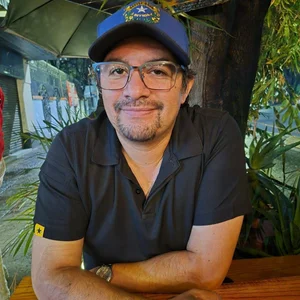
By Gamy Enriquez, MPA
The international system is witnessing a profound debate over the nature of global order. For decades, the “Liberal International Order” (LIO) has dominated world affairs, shaping the rules and norms of diplomacy, trade, and human rights. More recently, scholars and activists have begun advocating for a “Progressive International Order” (PIO), challenging the status quo and proposing alternative visions for global governance. This newsletter explores the ten most significant differences between these two paradigms, drawing on insights from leading international relations (IR) specialists and world affairs commentators.
1. Foundational Principles
Liberal International Order: Rooted in classical liberalism, the LIO emphasizes state sovereignty, individual rights, free markets, and multilateral cooperation. Its foundations lie in the post-World War II agreements and institutions like the United Nations, Bretton Woods system, and later, the World Trade Organization (Ikenberry, 2011).
Progressive International Order: The PIO draws from critical and postcolonial theories, prioritizing social justice, anti-imperialism, and global equity. It seeks to address the structural inequalities and power imbalances perpetuated by the LIO (Acharya, 2018; Progressive International, 2020).
2. Economic Philosophy
LIO: Supports neoliberal economic policies, deregulation, and open markets, aiming for economic growth through globalization (Keohane & Nye, 1977).
PIO: Advocates for fair trade over free trade, redistributive economic policies, and the prioritization of labor and environmental rights over corporate interests (Rodrik, 2018).
3. Approach to Sovereignty
LIO: Balances state sovereignty with international norms, often upholding state agency but intervening in cases of gross human rights violations (R2P doctrine).
PIO: Critiques the selective application of sovereignty and intervention, highlighting how interventions often reinforce hegemonic interests. PIO promotes genuine self-determination for all peoples (Chakrabarty, 2020).
4. Human Rights and Social Justice
LIO: Promotes individual human rights, democracy, and rule of law, but often through a Western-centric lens (Dunne & Flockhart, 2013).
PIO: Centers on collective rights, intersectionality, decolonization, and social justice, aiming to redress historic injustices and systemic discrimination (Bhambra, 2014).
5. Institutional Architecture
LIO: Relies on established, often Western-led institutions such as the UN, IMF, and World Bank.
PIO: Calls for democratizing global governance, empowering Global South voices, and creating new, inclusive institutions (Santos, 2014).
6. Security Paradigm
LIO: Focuses on collective security, military alliances (NATO), and non-proliferation, occasionally justifying intervention for peacekeeping.
PIO: Expands the security agenda to include human security, climate security, and non-militarized conflict resolution (UNDP, 1994).
7. Environmental Governance
LIO: Approaches climate change through market mechanisms (carbon trading), state commitments, and incremental agreements (Paris Accord).
PIO: Advocates for climate justice, robust regulation, and reparations for climate-impacted nations, emphasizing the disproportionate burden on marginalized communities (Klein, 2014).
8. Power Dynamics
LIO: Maintains a hierarchical world order with Western powers at the helm, albeit under the guise of rules-based governance.
PIO: Seeks to dismantle neocolonial power structures, promote multipolarity, and ensure equal voice for all nations (Acharya, 2018).
9. Global Solidarity and Movement-Building
LIO: Encourages government-to-government cooperation, public-private partnerships, and elite diplomacy.
PIO: Fosters transnational solidarity among civil society, labor unions, indigenous movements, and grassroots organizations (Progressive International, 2020).
10. Vision for the Future
LIO: Envisions gradual reform and adaptation to global challenges within existing frameworks.
PIO: Demands transformative change and reimagining of global systems, driven by popular mobilization and radical policy innovation (Wiener, 2021).
Conclusion
The Liberal International Order has shaped the modern world, but its shortcomings—especially regarding inequality, environmental degradation, and the persistence of neocolonial hierarchies—have fueled the rise of a Progressive International Order. While the LIO emphasizes stability and gradual improvement within established structures, the PIO calls for fundamental change, greater inclusivity, and justice-oriented policies. As global crises accelerate, the contest between these visions will define the trajectory of world affairs in the 21st century. In this context, the silver lining of Donald Trump's presidency is undeniable: his actions have not only accelerated the destruction of the Liberal International Order but have also exposed and corroded its domestic reflection within our own U.S. institutions. While this has produced widespread anger, frustration, and hopelessness, it has also created a unique opening for progressives. The key now is to pick up the pieces—and to direct all that disillusionment into building a Progressive International Order globally, as well as institutions that embody progressive values here at home in the United States.
As someone who ran as an independent Democrat and a true progressive, I believe the cornerstone of this transformation must be a Green Marshall Plan, anchored in universal basic income with Nevada leading the way. This approach would not only address climate and economic justice on a national scale but also serve as a model for progressive institution-building domestically and internationally.
Ultimately, we must be the change we want to see in the world. We must fight for that change, because it only seems impossible until it is done.
References
Acharya, A. (2018). The End of American World Order. Polity.
Bhambra, G. K. (2014). Connected Sociologies. Bloomsbury.
Chakrabarty, D. (2020). The Climate of History in a Planetary Age. University of Chicago Press.
Dunne, T., & Flockhart, T. (Eds.). (2013). Liberal World Orders. Oxford University Press.
Ikenberry, G. J. (2011). Liberal Leviathan: The Origins, Crisis, and Transformation of the American World Order. Princeton University Press.
Keohane, R. O., & Nye, J. S. (1977). Power and Interdependence. Little, Brown.
Klein, N. (2014). This Changes Everything: Capitalism vs. the Climate. Simon & Schuster.
Progressive International. (2020). Manifesto. https://progressive.international
Rodrik, D. (2018). Straight Talk on Trade. Princeton University Press.
Santos, B. de S. (2014). Epistemologies of the South: Justice Against Epistemicide. Routledge.
UNDP. (1994). Human Development Report: New Dimensions of Human Security. United Nations Development Programme.
Wiener, A. (2021). Contestation and Constitution of Norms in Global International Relations. Cambridge University Press.