Rethinking Argentina’s Place in the Americas: A Progressive Vision for Sovereignty and Solidarity
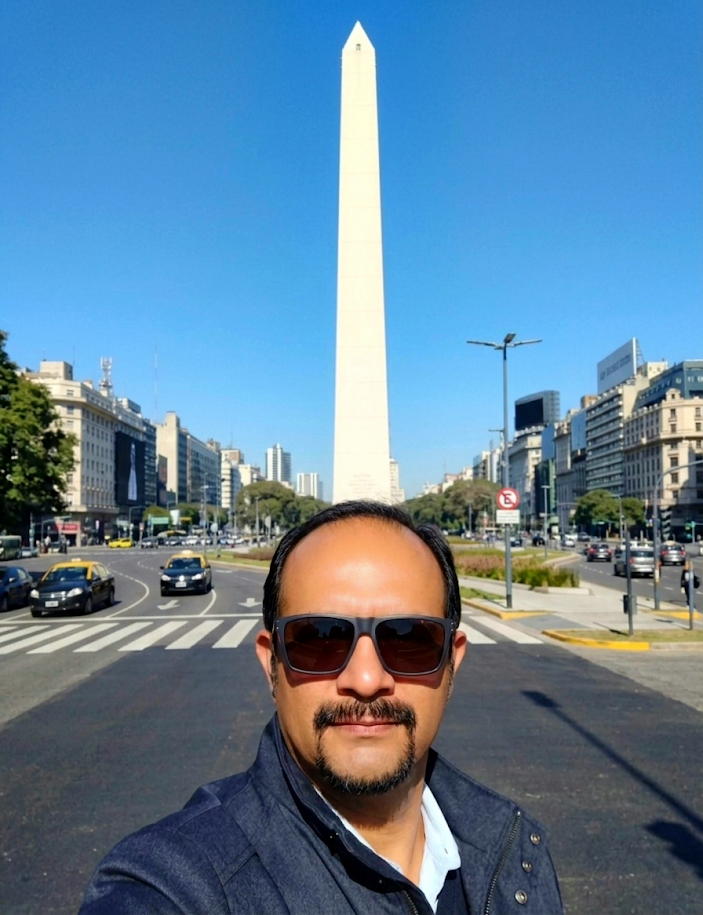
Buenos Aires, Argentina (circa 2022)
Argentina: From Global Promise to Perpetual Subjugation
For anyone who has studied Argentina’s history—and especially for those who have walked the grand boulevards of Buenos Aires—it is impossible not to feel a profound sense of what could have been. At the dawn of the 20th century, Argentina was among the richest nations on earth. Buenos Aires boasted the first underground subway system in the Western Hemisphere—its Subway opened in 1913, ahead of New York City, and rivaled any European metropolis in innovation and culture. The city was a beacon for immigrants and investors alike, its architecture and public life testaments to a cosmopolitan vision that saw Argentina as a modern, global financial center.
Yet, as those who follow my work know, the country’s trajectory was derailed by a toxic mix of international intervention, domestic mismanagement, and the relentless grip of neoliberal policies imposed by institutions like the International Monetary Fund (IMF). The story of Argentina is, in many ways, the story of the Monroe Doctrine—America’s long shadow cast across Latin America, purportedly for stability, but all too often for control.
The Washington Consensus: Subjugation by Debt
Decade after decade, Argentina has found itself “bailed out” by the IMF and other international bodies. But these bailouts have rarely been acts of solidarity; instead, they have been instruments of subjugation. The so-called Washington Consensus—a set of neoliberal policies including austerity, deregulation, and privatization—was foisted upon Argentina and much of the Global South in exchange for desperately needed loans. As Joseph Stiglitz, Nobel laureate economist, has written, these prescriptions often did more harm than good, deepening inequality and eroding national sovereignty (Stiglitz, Globalization and Its Discontents, 2002).
Every time Argentina faces a balance-of-payment crisis, the solution is more debt, more austerity. The cycle is endless: IMF loans, structural adjustment, social unrest, currency collapse, and then more IMF loans. This is not economic rescue; it is financial colonialism. As I wrote in my 2016 essay, “Why Argentina Matters,” the country’s experience is a cautionary tale for all who believe that international institutions act solely in the interests of the people they claim to help.
The Monroe Doctrine and the CIA: A Century of Interventions
Argentina’s loss of sovereignty is not just economic. The Monroe Doctrine, articulated in 1823, was ostensibly meant to keep European powers out of the Americas. In reality, it justified endless U.S. interventions across Latin America—sometimes overt, often covert. As declassified CIA documents reveal, the U.S. supported coups and dictatorships across the Southern Cone, from Operation Condor in the 1970s to meddling in Argentina’s politics during the Dirty War (see National Security Archive, “The CIA and Argentina: 1976-83”).
These interventions were about more than ideological rivalry with the Soviet Union; they were about maintaining a hemisphere aligned to Washington’s interests, regardless of the cost to democracy, human rights, or economic independence. For Argentina, the result was decades of instability and trauma, the aftershocks of which are still felt today.
A Post-COVID Argentina: The Struggle Intensifies
When I first visited Argentina after the COVID-19 lockdowns in 2022, I was struck by how much the country still embodied the magic described in the books I had read for two decades—Jorge Luis Borges, Julio Cortázar, and the chronicles of its tumultuous history. But the economic pain was sharper, more visible. The pandemic had deepened the debt crisis, impoverished the middle class, and left the government with even fewer options. The Buenos Aires I encountered was more beautiful and more wounded than ever before.
This is why, when I ran for Congress, I called for a Green Marshall Plan—a bold vision inspired by the original U.S. Marshall Plan that rebuilt Europe after World War II. My platform included the creation of a Nevada Permanent Fund, leveraging our state’s vast mineral wealth (including lithium, just like Argentina) to pay a universal basic income to every American. But my vision extends beyond Nevada and the United States. It is time to imagine a continental strategy, from Greenland to Argentina, that invests in sustainable development, social integration, and a just transition away from fossil fuels.
A Green Marshall Plan for the Americas
Argentina is not a poor country; it is a country made poor by extractive institutions and policies. The solution is not more debt but more investment—investment in people, in green infrastructure, in education, and in regional integration. The European Union offers a model for what is possible: sovereign nations voluntarily pooling resources and aligning policies for mutual benefit, rather than submitting to the dictates of foreign creditors.
The Monroe Doctrine must be redefined for the 21st century. The United States faces challenges—climate change, inequality, mass migration—that do not respect borders. Our destinies are intertwined. We must reject the old paradigm of intervention and subjugation and embrace a new era of partnership, rooted in respect for sovereignty, dignity, and the right of every nation to chart its own course.
Conclusion: Toward Dignity and Sovereignty
For twenty years, I have listened to the same tired refrains about Argentina—another bailout, more debt, more austerity. Enough. Argentina deserves a progressive, international path forward. One that restores dignity and sovereignty to its people. One that acknowledges their history, their suffering, and their resilience. And one that recognizes that our future, from Nevada to Buenos Aires, is bound together by the promise of a greener, fairer, more integrated Americas.
—Gamy Enriquez, MPA
References
Stiglitz, J. (2002). Globalization and Its Discontents.
National Security Archive. (n.d.). “The CIA and Argentina: 1976-83”. https://nsarchive.gwu.edu/briefing-book/southern-cone/2023-03-24/cia-argentina-1976-83
Enriquez, G. (2016). “Why Argentina Matters.” [Personal archive]
Let us build a new consensus—one worthy of Argentina’s promise and the Americas’ shared future.