Remembering the Breakup: Lessons from Yugoslavia’s Collapse and America’s Crossroads
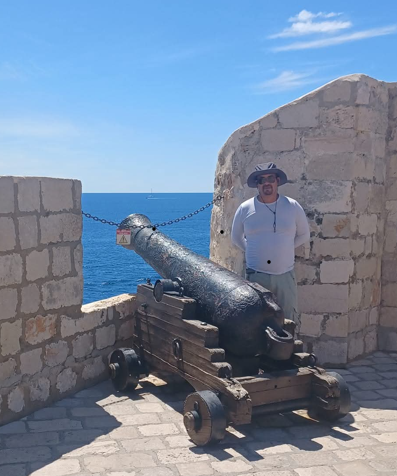
Walls of Dubrovnik, Croatia (cira 2023)
Today marks a somber anniversary in European history—one that echoes with chilling relevance across the Atlantic. On June 25, 1991, Slovenia and Croatia declared their independence from Yugoslavia. The Yugoslav People’s Army intervened, sparking the Ten-Day War in Slovenia and igniting the far more brutal, protracted conflict in Croatia. These events signaled the violent unraveling of a once-unified nation, plunging the region into a decade of civil war, ethnic cleansing, and societal trauma whose scars are still visible today.
I write this reflection after traveling through the Balkans in the summer of 2023, tracing the routes of old frontlines, visiting memorials, and talking with survivors. The experience was haunting—a living reminder of how a civil society can fracture, how everyday towns can become battlefields, and how neighbors can turn against each other when the bonds of trust and shared purpose dissolve. As I watched the sun set over the hills of Vukovar and stood in the rebuilt squares of Ljubljana, I was struck not only by the resilience of these communities but also by the warning they offer to us, here in America.
A Mirror Across the Atlantic
The United States in 2026 is not Yugoslavia in 1991. Yet, the parallels are too urgent to ignore. America stands at a precipice—between a future defined by entrenched, corporate-backed tyranny and the difficult, necessary work of a political revolution. Our political institutions, hollowed out by decades of deregulation and corruption, increasingly serve the interests of billionaires while leaving ordinary citizens in a state of precarity.
The warning signs—systemic economic disparity, the illusion of reform, the militarization of society—were all present in the Balkans before the collapse. There, as here, the bonds of economic security and civic trust frayed first. The economy faltered, elites stoked grievances, and soon the old language of unity gave way to the new language of suspicion and exclusion. This is why we must pursue a political revolution to address the root causes and restore faith in our democracy.
Jeff Sharlet, in his essential book The Undertow: Scenes from a Slow Civil War, describes how anger and grievance in America have morphed into dangerous, violent ideologies. He documents how the myth of martyrdom, Christian nationalism, and an “innocence cult” of grievance have radicalized mainstream politics. Through interviews and dispatches, Sharlet traces how fragmented violence and militia activity are already a reality—an undercurrent running just beneath the surface.
Political scientist Barbara F. Walter, in How Civil Wars Start, argues that modern civil conflict rarely begins with dramatic declarations or clear frontlines. Instead, it emerges from “anocracy”—a fragile, unstable zone between democracy and autocracy—and from factionalism, when identity-based politics overtake economic or civic concerns. Most chilling is her conclusion that America has already slipped into this danger zone, with partisan polarization, rampant distrust, and extremist groups signaling a nation at risk.
What I Saw—and What It Means
Walking through the towns of Bosnia and Croatia, I saw the legacy of war not just in ruined buildings, but in the tense coexistence of communities, in the stories of lost family members, and in the eyes of young people born long after the shooting stopped. The lesson was clear: civil war is never truly over, and its causes are never as distant as we wish to believe.
In America, the signs are everywhere. Our politics is increasingly defined by eliminationist rhetoric—demonizing “the other,” whether by race, religion, or ideology. Our institutions are losing legitimacy; the military is revered while civilian leadership is scorned. Surveillance and militarized policing have become commonplace, a domestic echo of failed empires abroad. The most hopeful sign is the courage and organizing of young people—from the George Floyd protests to new labor movements—who refuse to accept the status quo and are pushing for a genuine political revolution.
Why I Ran—and What We Must Do
This is why, after returning from the Balkans, I made the decision to run for Congress. I did so not out of ambition, but out of necessity—because the lessons of Yugoslavia are too urgent to ignore. We cannot afford to wait for someone else to solve the crisis. We need bold, structural solutions that address the root causes of our division.
That is why I have championed a “Green Marshall Plan” for America, starting with a Nevada Permanent Fund—a publicly owned investment fund that would generate revenue for a national universal basic income of $1,300 per month for every American. This is not just about economic relief; it is a strategic investment in civic unity and social resilience. By ensuring that everyone has a share in the nation’s wealth, we can begin to rebuild trust, reduce desperation, and inoculate ourselves against the politics of division and fear.
A Choice—Tyranny or Change
The anniversary of Yugoslavia’s breakup is not just a history lesson; it is a call to action. We face a stark choice: descend further into a fragmented, militarized, and oligarchic society—or summon the courage to pursue a true political revolution that delivers real, systemic change.
As Walter reminds us, civil wars are not inevitable. They begin when we allow elites to weaponize our divisions and when institutions fail to protect the people. They are stopped when we renew our commitment to democracy, hold leaders accountable, and refuse to let identity-based factionalism define our politics.
As I saw in the Balkans, recovery is possible—but it comes at a terrible cost. Let us heed the warnings, learn from history, and choose the path of solidarity and renewal while we still can.
This is why economic freedom is not only vital for individual dignity, but also critical to the survival of our democracy. Without true economic freedom for all Americans, our divisions will continue to deepen, and the threat of civil conflict will only grow. Ensuring broad economic opportunity and justice is the surest way to prevent the kind of civil war that tore Yugoslavia apart—and to secure a stable, inclusive future for America.
—Gamy Enriquez, MPA
Former Independent Democratic Candidate for Congress, NVCD-02