I’m Your Average DoorDasher: My Life at the Intersection of Hustle and Inequality
I never thought I’d be here. Not after I did everything I was told would lead to success in America: graduating from college, earning my MPA, applying myself—always. Yet here I am, staring at my phone, waiting for the next DoorDash order to pop up. I’m not alone; around 70 million Americans, roughly 36% of the workforce, participate in the gig economy as of 2025, either as a primary or secondary job. There are millions of us hustling in gig economy jobs, just to keep the lights on. Our stories are the real face of economic inequality in America today.
I lost my last steady job at one of Tesla’s call centers in Nevada. Without notice, Elon Musk decided to listen to Wall Street and the financial market in the first half of 2018, resulting in abrupt layoffs. It wasn’t performance, it was profit margins. Neoliberal choices—outsourcing, deregulation, and relentless cost-cutting—devastated my industry. The promise of upward mobility dissolved with my severance package. Still, I didn’t give up. I finished my degrees, kept applying for jobs, and kept hustling. I thought maybe, just maybe, I could get ahead if I worked hard enough.
But the truth is, no matter how hard I run, I can’t catch a break. My degrees should have opened doors, but employers aren’t hiring for decent wages or secure hours. So, I dash—delivering meals, groceries, whatever people will pay for. Every day, I’m reminded that the American Dream is rigged. I race between deliveries to make ends meet, watching my savings shrink as rent, healthcare, and food prices inflate faster than my pay. The cost of living rises every month, but my earnings barely budge.
I see inequality everywhere. I deliver to luxury apartments and then to motels where families live week to week. I hand $20 salads to folks who don’t think twice about the tip, and then I drive through neighborhoods where people pool change for fast food. The system rewards wealth and punishes work. Even after years of education and experience, I’m left fighting for scraps. And I’m not alone—millions more are just like me, educated, skilled, and struggling.
Economic insecurity isn’t just a personal failing — it’s a policy choice. Progressive economists like Robert Reich and organizations such as the Economic Policy Institute have shown how decades of wage stagnation, union-busting, and corporate tax breaks have hollowed out the middle class. As Anand Giridharadas argues in "Winners Take All," philanthropy cannot fix what policy broke. We need structural change, not charity.
That’s why I believe in bold solutions like Universal Basic Income (UBI), the Citizens Dividend, or the Freedom Dividend championed by Andrew Yang. A guaranteed income isn’t about laziness—it’s about dignity, stability, and freedom. UBI would give all of us the breathing room to pursue opportunities, care for our families, and participate in the economy without fear of destitution. It’s not just an idea; it’s a necessity in a society where hard work is no longer enough to survive.
We have the resources. As economists at the Roosevelt Institute and progressive leaders like Alexandria Ocasio-Cortez have shown, we can fund these programs by taxing extreme wealth, closing corporate loopholes, and investing in our communities. Real progress means ensuring everyone—no matter their background or education—has a fair chance at a decent life.
Until then, I’ll keep dashing. But I’ll also keep fighting for a future where people like me aren’t forced to hustle just to survive. A just society doesn’t make its people earn their humanity one delivery at a time.
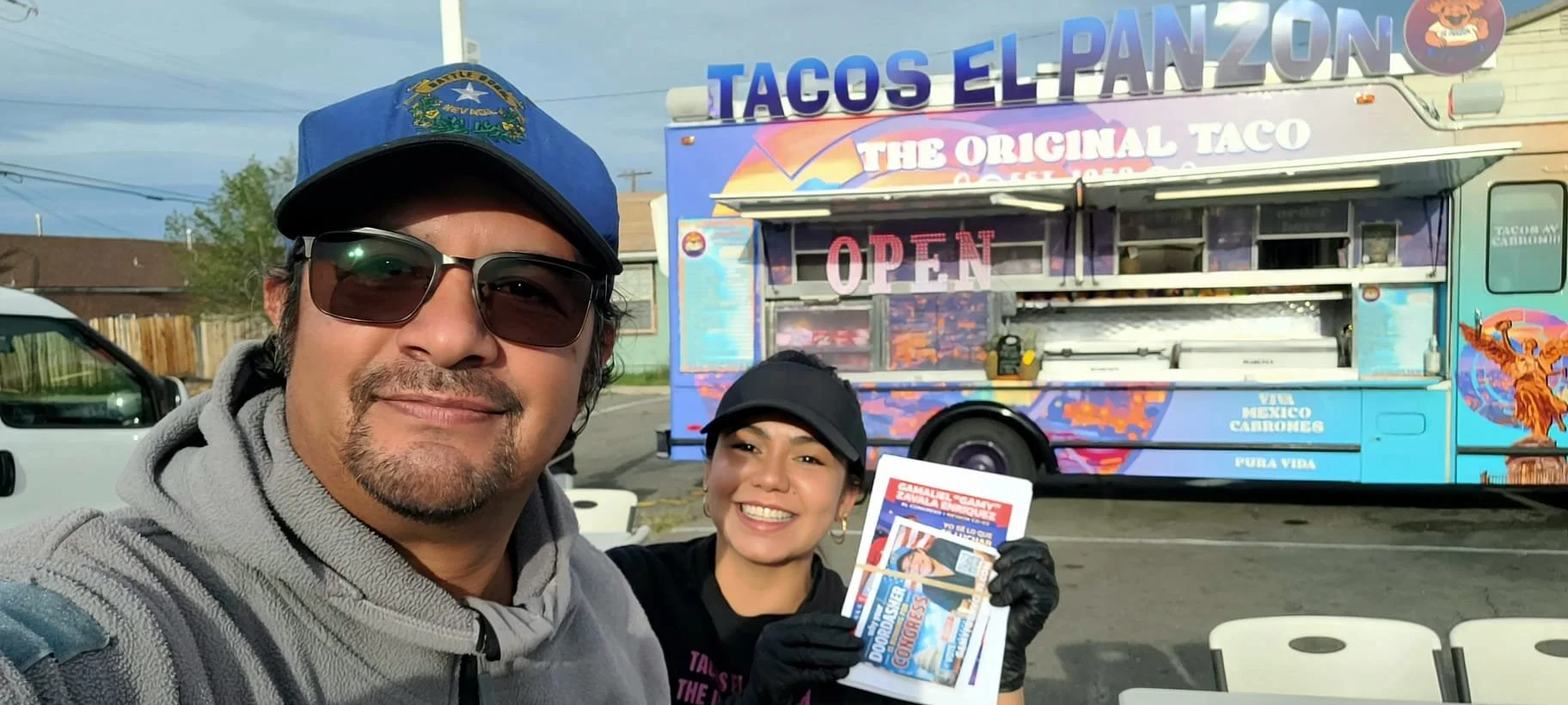
This is why I am running for Congress. This is not about me. It is about us. I am battle born for economic justice and freedom. Please volunteer, donate, share, and tell your friends—billionaires will not save us.